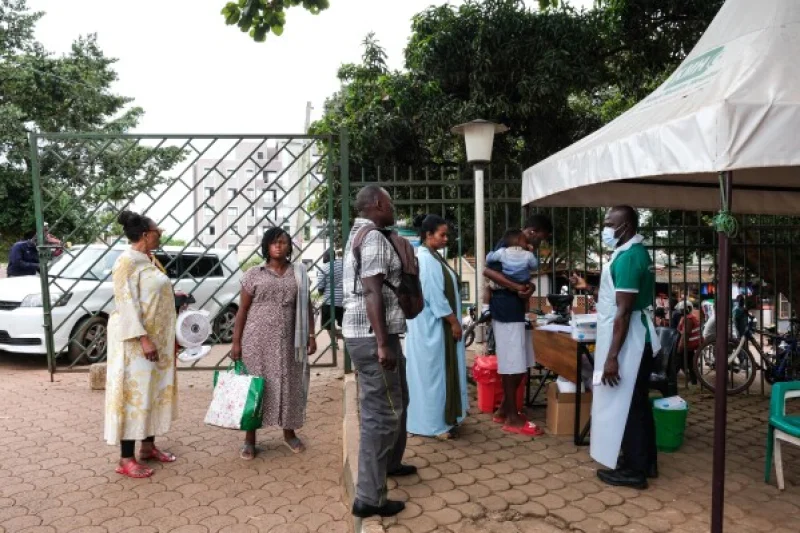
The World Health Organization has declared the rapidly escalating Ebola outbreak in the Democratic Republic of Congo and Uganda a Public Health Emergency of International Concern — the highest alarm level the United Nations health body can issue short of a full pandemic declaration. With nearly 90 suspected deaths, more than 300 suspected cases, no approved vaccine, and no approved treatment, global health authorities are racing to contain one of the most alarming disease events of the decade.
What Is the Ebola Outbreak 2026: Where, When, and How It Started
The outbreak's patient zero was a nurse who arrived at a health facility in Ituri's capital, Bunia, on April 24, showing Ebola-like symptoms. Health authorities believe the outbreak started in late April.
The suspected index case was a nurse who died at the Evangelical Medical Centre in Bunia after showing symptoms that included fever, bleeding, vomiting, and severe weakness. Health Minister Samuel Roger Kamba Mulamba confirmed that samples tested on Thursday had confirmed eight cases of the Bundibugyo strain of the Ebola virus in the health zones of Rwampara, Mongwalu, and Bunia.
In early May, a hospital in Bunia Health Zone in northeastern DRC identified a cluster of severe illnesses affecting healthcare workers. Initial samples tested in DRC were negative for Ebola virus, but by May 15, eight out of 13 samples tested positive and five were inconclusive.
WHO Declares Public Health Emergency of International Concern
As of May 16, 2026, eight laboratory-confirmed cases, 246 suspected cases, and 80 suspected deaths have been reported in Ituri Province of the Democratic Republic of the Congo across at least three health zones, including Bunia, Rwampara, and Mongbwalu. In addition, two laboratory-confirmed cases, including one death, with no apparent link to each other have been reported in Kampala, Uganda, within 24 hours of each other, among two individuals travelling from the Democratic Republic of the Congo.
The outbreak does not yet meet the criteria of a pandemic emergency, the WHO said. But with a rising number of cases, at least 80 suspected deaths, and no approved vaccine, fears are mounting over how effectively the outbreak can be contained.
A positive case in Goma has also been confirmed. "It involves the wife of a man who died of Ebola in Bunia, who travelled to Goma after her husband's death whilst already infected," Professor Jean-Jacques Muyembe, director of the Congolese National Institute, stated.
What Is Ebola and What Is the Bundibugyo Virus?
Ebola is a severe and often fatal disease that is spread through direct contact with the bodily fluids of an infected person, according to the Africa Centres for Disease Control and Prevention. It can also be spread through contact with contaminated materials or a person who has died from the disease. There are six known virus species linked to Ebola, but only three cause most large outbreaks: Ebola virus, Sudan virus, and Bundibugyo virus — the latter of which is behind the current epidemic.
The Bundibugyo virus is one of four types of orthoebolaviruses that cause Ebola disease in people. There is no vaccine for Bundibugyo virus, and treatment consists of supportive care.
This is only the third time Bundibugyo virus disease has been reported. Although more than 20 Ebola outbreaks have taken place in the DRC and Uganda, this rare strain is less well understood and standard rapid field tests often miss it.
Ebola Symptoms: What to Watch For
Symptoms include fever, body pain, weakness, vomiting, and in some cases bleeding, according to the WHO. These symptoms can appear anywhere from two to 21 days after exposure to the virus, which is why the WHO is urging restricted travel for anyone within 21 days of potential contact with confirmed cases. The disease progresses rapidly, and without intensive supportive care, the outcomes are often fatal.
Ebola fatality rates have varied in past outbreaks from 25% to 90%, with the average death rate sitting at approximately 50%. The fatality rate involving the Bundibugyo strain is estimated to be between 25% and 40%, according to Doctors Without Borders.

How the Ebola Virus Spreads and Why This Outbreak Is Harder to Contain
The high positivity rate of the initial samples collected, the confirmation of cases in both Kampala and Kinshasa, the increasing trends in syndromic reporting of suspected cases, and clusters of deaths across Ituri province all point toward a potentially much larger outbreak than what is currently being detected and reported, with significant local and regional risk of spread.
Africa CDC Director General Jean Kaseya warned that the Africa CDC is concerned about the risk of further spread due to the urban context of Bunia and Rwampara, as well as intense population movement and mobility related to mining in the affected areas, which are close to Uganda and South Sudan.
A conflict involving several rebel groups is likely to pose a significant challenge to the response. The ongoing insecurity, humanitarian crisis, high population mobility, the urban or semi-urban nature of the current hotspot, and the large network of informal healthcare facilities further compound the risk of spread, as was witnessed during the large Ebola virus disease epidemic in North Kivu and Ituri provinces in 2018-19, the WHO warned.
No Vaccine, No Approved Treatment: The Unique Danger of the Bundibugyo Virus
Jean-Jacques Muyembe, the Congolese virologist who co-discovered Ebola and heads the National Institute for Biomedical Research in Kinshasa, told Reuters that all but one of Congo's 16 previous outbreaks had been caused by the Zaire strain. The identification of a different variant will complicate the response, as existing treatments and vaccines were developed against the Zaire strain.
There are no approved vaccines or therapeutics for the Bundibugyo strain. However, researchers say there is now a candidate for an experimental vaccine that they are continuing to study.
Given the high transmissibility of Ebola, infectious disease experts recommend that healthcare workers dealing with Ebola patients wear head coverings, as well as goggles, masks or face shields, gloves, gowns, and rubber boots.
Ebola Outbreak History: Congo's Deadly Record
The DRC has experienced at least 17 Ebola outbreaks since the virus was first discovered there in 1976, making it one of the countries most affected by the disease. The deadliest Ebola outbreak in the DRC occurred from 2018 to 2020 and killed nearly 2,300 people. Another outbreak last year killed at least 34 people before it was declared over in December. Ebola has killed about 15,000 people since it was discovered, almost all in Africa.
Between 2014 and 2016, 28,600 people were infected and 11,325 people died during the largest Ebola outbreak in history, according to the World Health Organization.
What the WHO Is Recommending and the Risk to Other Countries
The WHO advised immediate isolation of confirmed cases, allowing only restricted national travel and no international travel until 21 days after exposure. It urged countries not to close their borders or restrict travel and trade, as this could lead to people and goods making unmonitored border crossings.
As of May 17, 2026, no cases of Ebola disease have been confirmed in the United States because of this outbreak. The overall risk to the American public and travelers remains low. CDC acting Director Jay Bhattacharya said: "CDC has extensive experience and expertise in responding to Ebola outbreaks. We have helped with other Ebola outbreaks in the past. We have lots of hard-earned lessons."
Doctors Without Borders' emergency program manager Trish Newport warned: "The number of cases and deaths we are seeing in such a short timeframe, combined with the spread across several health zones and now across the border, is extremely concerning. In Ituri, many people already struggle to access health care and live with ongoing insecurity, making rapid action critical to prevent the outbreak from escalating further."
The situation remains fluid and fast-moving. Health authorities across Africa, the WHO, and the CDC are urging vigilance, rapid case identification, and coordinated cross-border containment as the Ebola outbreak 2026 continues to develop.