


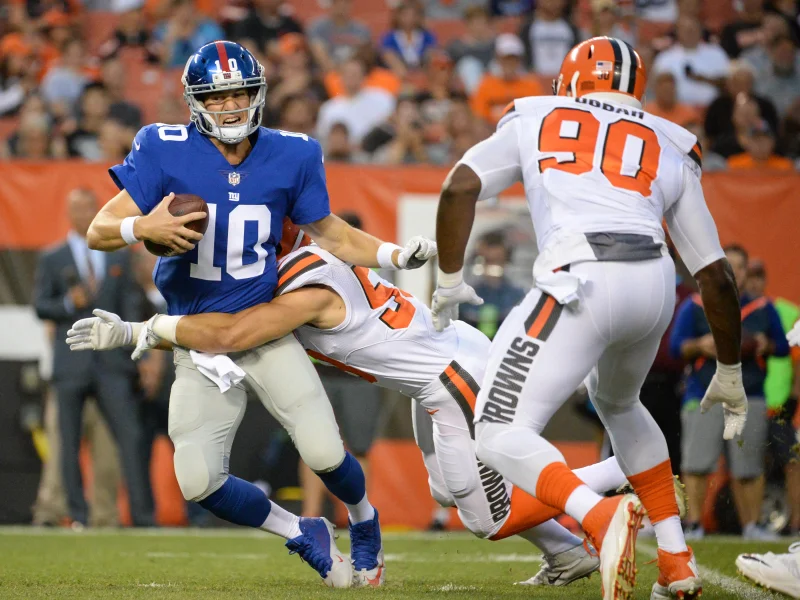
Eli Manning says the 2004 draft-day standoff that sent him to the Giants had less to do with football fit than with what he saw inside the Chargers organization. On Bussin’ with the Boys, Manning said he did not believe the Chargers were the most committed team to winning at the time.
He said there was visible friction among head coach Marty Schottenheimer, general manager A.J. Smith and the Spanos family when the team brought him to New Orleans for a workout and dinner. Manning recalled people in the room yelling and, in his words, “kind of like fighting,” while Schottenheimer was upset they were eating at a Marriott restaurant. “It just didn’t seem there was a lot of agreement on things,” Manning said, adding that the team did not seem committed to building a great winning franchise then.
The comments revisit one of the most important moves of the modern NFL draft. In 2004, the Chargers selected Manning first overall and then sent him to the Giants for Philip Rivers, a swap that changed the trajectory of both franchises. Manning spent his entire NFL career with New York, and the Giants went on to win two Super Bowl titles with him under center, including one of the biggest Super Bowl upsets in league history against the New England Patriots.
The trade also left a long shadow in San Diego. The Chargers have not been back to a Super Bowl since the 1994 season, a drought that has made the 2004 decision look even more consequential with time. Manning, meanwhile, became a four-time Pro Bowler and a two-time Super Bowl MVP, finishing with 366 touchdown passes and 57,023 passing yards, numbers that rank him 11th all time in both categories.
Even with that résumé, Manning is still waiting for his name to be called for the Pro Football Hall of Fame. That keeps the 2004 draft story alive in a different way: not just as a reminder of a trade that altered two teams, but as a career that continues to be judged against the sport’s highest individual honor.
