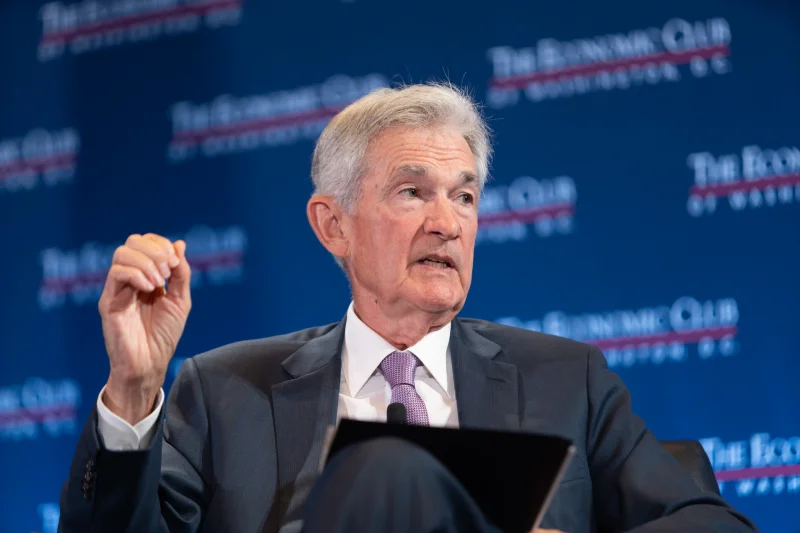
Kevin Warsh told senators on April 21 that artificial intelligence could push demand higher in the near term, but he argued the bigger force may be on the supply side of the economy, where a productivity boom could ease inflation and give the Federal Open Market Committee room to cut interest rates.
Warsh, testifying before the Senate Banking Committee, said the capital spending needed to build data centers would likely add only “a few tenths of one percent” to demand. He said the larger effect could come from AI lifting the economy’s potential output. In his view, the inflationary pressure from the buildout of AI infrastructure should be more than offset by wage growth and what he called a mammoth productivity boost for corporate America.
That is a striking turn for Warsh, who served as a voting member of the Fed’s 12-person policy committee from Feb. 24, 2006, to March 31, 2011, and often pressed against lower rates during that stretch. The former governor’s comments arrived as Jerome Powell’s final day as Fed chair came and went on May 15, leaving the central bank facing the same old problem with a new variable: how to read inflation when technology is changing the speed of the economy itself.
Warsh’s case was blunt. He said AI has “two elements” for the economy, with the first being the rise in capital expenditures to build data centers and the second being the broader productivity gain. The first, he said, would increase demand by a modest amount. The second could be considerably bigger. If those gains show up, he said, the Fed could have the luxury of lowering interest rates because stronger output would offset the inflation risk.
Not everyone inside the Fed soundproofing shares that view. Chicago Fed President Austan Goolsbee has predicted that AI could bring higher inflation, if not stagflation. The split matters because public disagreements are now surfacing inside the central bank over whether AI will be disinflationary, inflationary, or both at once depending on the horizon.
The argument also echoes an earlier era, when the internet transformed corporate America and markets over time, not in one clean burst. PwC analysts believe AI could create up to $15.7 trillion in global economic value by 2030, a scale that helps explain why central bankers are being pulled into debates that once would have belonged mainly to tech investors and company executives.
For now, the policy question is not whether AI will matter, but how quickly. If Warsh is right, the Fed may find that the biggest economic effect of the AI buildout is not the power drawn by server farms, but the extra output those investments make possible.
Related reading on market moves: The Motley Fool Australia: Shares set to rise as oil jumps above $104.