


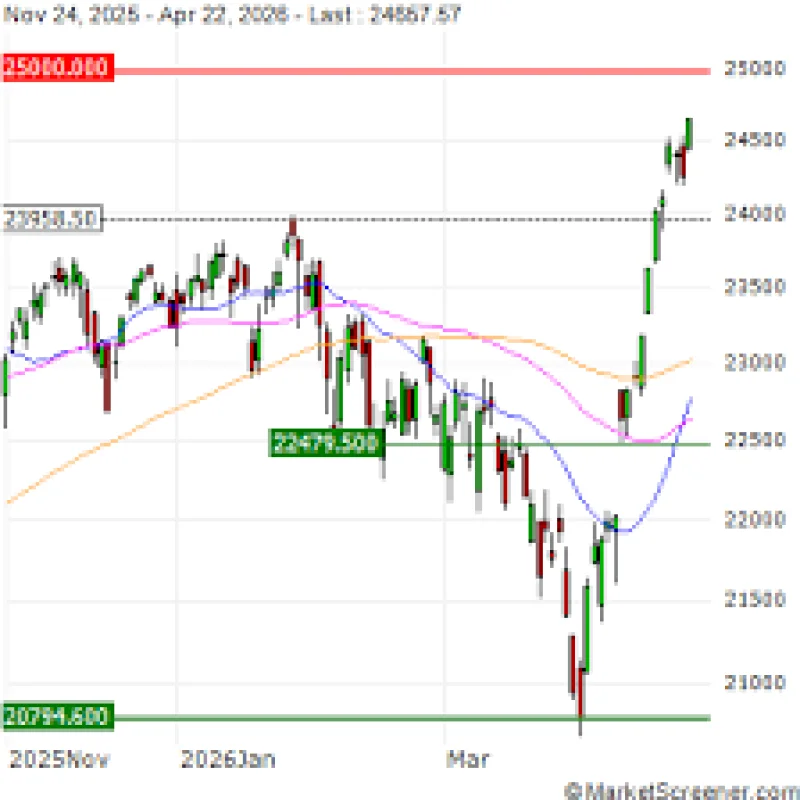
The dollar jumped to a 2.5-week high on May 14 as a run of stronger-than-expected U.S. data pushed Treasury yields higher and kept traders from betting on near-term Federal Reserve easing. The Cboe Volatility Index reflected that firmer risk backdrop, while gold and silver sold off hard.
The dollar index rose 0.39% after the New York Fed’s May Empire manufacturing survey showed general business conditions unexpectedly climbing to 19.6, a four-year high. April U.S. manufacturing production also rose 0.6% month over month, the biggest increase in 14 months, and the 10-year T-note yield pushed to an 11.75-month high of 4.58%.
For traders, the message was blunt: the market is not pricing a quick pivot by the Fed. Swaps were discounting only a 3% chance of a 25 basis point rate cut at the next FOMC meeting on June 16-17, leaving the dollar with a clear tailwind as investors recalibrated the path for U.S. rates.
The move rippled across major currency pairs. EUR/USD fell 0.33% to a five-week low, while USD/JPY rose 0.20% and the yen slipped to a two-week low against the dollar. The picture abroad was mixed but still dollar-negative in places: swaps were discounting an 89% chance of a 25 basis point rate hike by the European Central Bank at its next meeting on June 11, while Japan’s April producer prices rose 2.3% month over month and 4.9% year over year, and April machine tool orders jumped 45.1% from a year earlier, the largest gain in 4.25 years.
That strength in the dollar and in global bond yields was a clear headwind for precious metals. June COMEX gold fell 124.20 points, or 2.65%, while July COMEX silver sank 8.073 points, or 9.46%, after investors were confronted with rising yields from the U.S. to Europe and Japan. A stronger dollar makes commodities priced in dollars more expensive for overseas buyers, and higher yields reduce the appeal of non-interest-bearing assets like gold.
The tension now sits in the gap between strong U.S. data and an economy market still betting the Fed will eventually cut. The Treasury market has moved first, the currency market has followed, and that leaves traders watching whether the next round of inflation and activity data can keep the pressure on both the euro and precious metals, or whether the dollar’s surge will start to run into its own resistance.
