


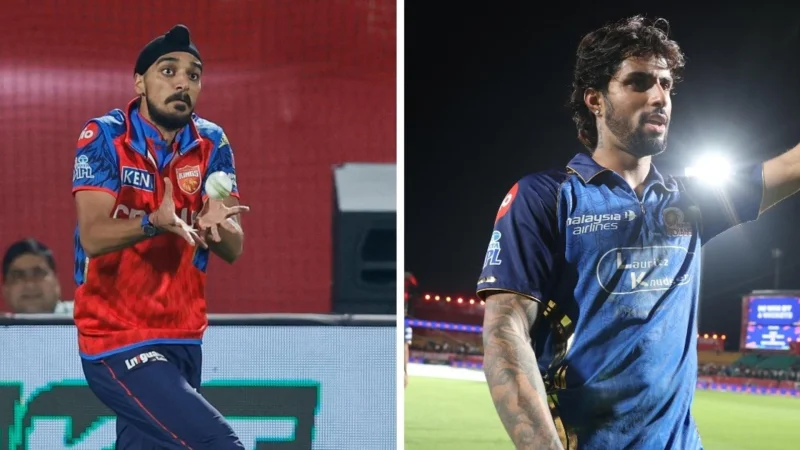
A Snapchat clip filmed before Punjab Kings’ match against Mumbai Indians has pushed an uncomfortable exchange into the spotlight, after Arshdeep Singh was seen stopping Tilak Varma as the Mumbai Indians batter walked past him and saying, “Oye andhere.” Arshdeep then asked Varma why he does not apply sunscreen, before pointing toward Naman Dhir and calling him the “noor” of Punjab.
Varma did not turn the moment into a confrontation. He appeared to laugh it off and replied that he did apply sunscreen. Hours later, he did what Punjab Kings could not stop: he made an unbeaten 75 off 33 balls and helped Mumbai Indians chase down 201 successfully.
What happened after the match added another layer. Mumbai Indians posted a reel with the lyric, “Andhera tera maine le liya, mera ujla sitara,” a line that broadly translates to, “I have taken your darkness, my bright star.” In isolation it may read like a playful social media flourish. In context, it landed in a sport that has repeatedly had to confront how easily jokes about skin colour slide into something harsher.
That is why the clip has resonated beyond a single game. The language was casual, even smiling, and that is often how colourist remarks arrive in India — as teasing, familiarity or locker-room banter. But the familiarity is part of the problem. Skin colour has long shaped beauty standards, matrimonial preferences, film casting, advertising and everyday nicknames in India, which makes words like these carry a weight that extends far beyond the boundary rope.
Cricket has seen this before. Darren Sammy has said he was called “kaalu” when he played for Sunrisers Hyderabad. Abhinav Mukund has spoken about years of comments and abuse over his skin colour. Laxman Sivaramakrishnan recently said he faced colour-based discrimination throughout his life and in the Indian team. Put together, those accounts show why a few words in a pre-match clip are not easy to brush away.
The tension here is that nothing in the exchange needed to become public at all. Yet once it was, the meaning was no longer limited to a joke between cricketers. It became another reminder that the sport remains entangled with the same prejudices that follow people into schools, workplaces and public life, often disguised as humour until someone points out what was really said.
Varma’s innings settled the result on the field. The broader story does not settle so neatly. As Indian cricket keeps selling itself on talent, swagger and entertainment, it still has to decide how much room it wants to give to a culture where colour can be used as a punchline — and whether the next clip is treated as banter or as the thing that finally forces a harder conversation.
