The World Health Organization has declared the Ebola outbreak caused by Bundibugyo virus in the Democratic Republic of the Congo and Uganda a public health emergency of international concern, saying the disease has already crossed borders and now needs coordinated action. The WHO said the event does not meet the criteria for a pandemic emergency under the International Health Regulations.
The declaration comes after two confirmed cases were reported in Kampala on May 15 and May 16 following travel from the Democratic Republic of the Congo. Both patients were admitted to intensive care units in the Ugandan capital, a stark sign that the outbreak has already reached a level of seriousness beyond a local response. Neighboring countries that share land borders with the Congo are considered at high risk for further spread, as the WHO pointed to population mobility, trade and travel links, and ongoing epidemiological uncertainty as factors raising the danger.
The decision places the outbreak in a category reserved for events that can demand a wider international response. In practical terms, the WHO said the situation requires international coordination and cooperation to understand how far the outbreak has spread and to align surveillance, prevention and response efforts. Before making the determination, the organization said it had consulted the States Parties where the event is known to be occurring.
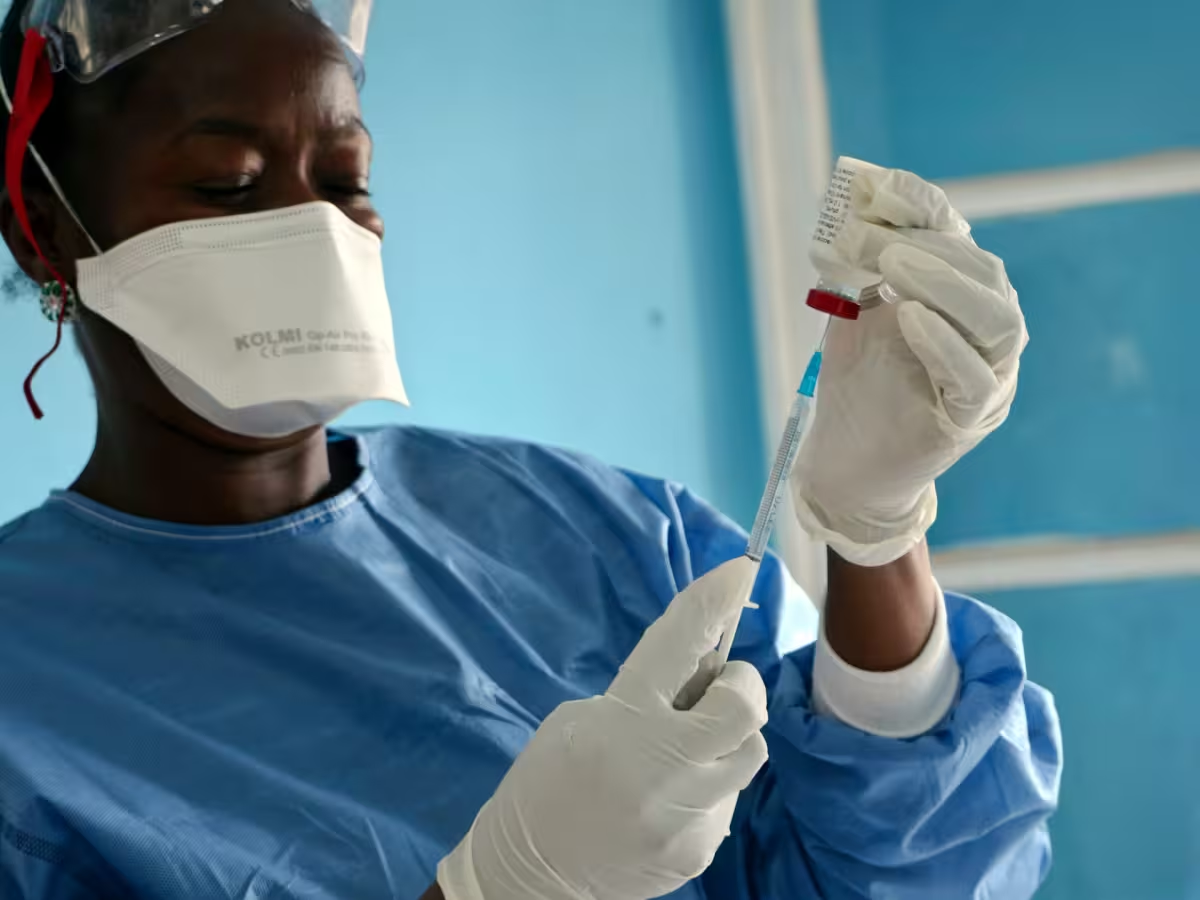
The risk list the WHO released is broad and immediate. It includes risk communication and community engagement, infection prevention and control in health facilities and in the context of care, patient referral pathways and access to safe and optimized intensive care, research and development of medical countermeasures, and border health, travel and mass-gathering measures. The WHO also said it will convene an Emergency Committee as soon as possible to advise on temporary recommendations.
There is still a gap between the headline and the scale of the response. The WHO says international spread has already been documented, but the extent of the outbreak remains uncertain enough that it is asking for faster surveillance and sharper coordination across borders. That is why the next moves matter: how quickly affected governments share data, how tightly health systems can isolate and treat patients, and whether border and travel measures can slow further transmission without losing sight of care.
The WHO Director-General also thanked the leadership of the Democratic Republic of the Congo and Uganda for what he described as their commitment to take necessary and vigorous action to bring the event under control, and for their frankness in assessing the risk to other states. For Kampala, where two patients are already in intensive care, the outbreak is no longer a warning on the horizon. It is in the ward, on the border and now at the center of an international public health response.