Lens faced Nice in the final of the Coupe de France on a night that carried far more than a trophy. Around Stade Bollaert, spectators were already gathering at 18:30, with the gates set to open at 19:00 for a final that would also reshape the European picture for Rennes and Monaco depending on the result.
Nice came in with little recent momentum, having won only three of its previous 14 matches. Two of those victories came in the Coupe de France, including a penalty shootout win in the quarterfinal, but the run still left Jean-Pierre Rivère talking about a side under pressure before kickoff. “Le contexte on le connait, il y a une équipe en pleine forme et puis nous on est en difficulté,” he said. Still, he insisted Nice would not surrender the final, adding: “Mais un match ça se joue et cette finale, on ne va pas la lâcher.”
The stakes extended beyond Nice’s own season. If Lens won, Rennes’s sixth place in Ligue 1 would send it into the Europa League, while Monaco would reach Europe through the Conference League playoffs. If Nice won, Rennes would go into the Conference League playoffs, Monaco would miss out on Europe and Nice would take a place in the Europa League next season. For a final supposed to stand on its own, the result carried knock-on effects across the table.
Before the match, the confirmed lineups showed both sides going with full-strength intentions. Nice named Dupé, Clauss, Mendy, Dante, Oppong, Bard, Boudaoui, Coulibaly, Diop, Cho and Wahi. Lens lined up with Risser, Sarr, Ganiou, Antonio, Udol, Thomasson, Sangaré, Abdulhamid, Saint-Maximin, Edouard and Thauvin. One of the more striking selections was Djibril Coulibaly, 17 years old and starting for only the third time this season, after previous starts at Lisbon in the Champions League playoff and away to Ludogorets in Nice’s final Europa League match.
Jean-Louis Leca said Lens wanted to mark history and bring the club back to the forefront. “On va gagner!” he said, in remarks that captured the mood around the Lens camp as the club chased a 3rd star in its history. The words fit the occasion: a packed final, a live television audience that had already drawn more than 1 million viewers since the 7th round, and a stadium ready for 90 minutes that could alter the rest of the season for more than one club.
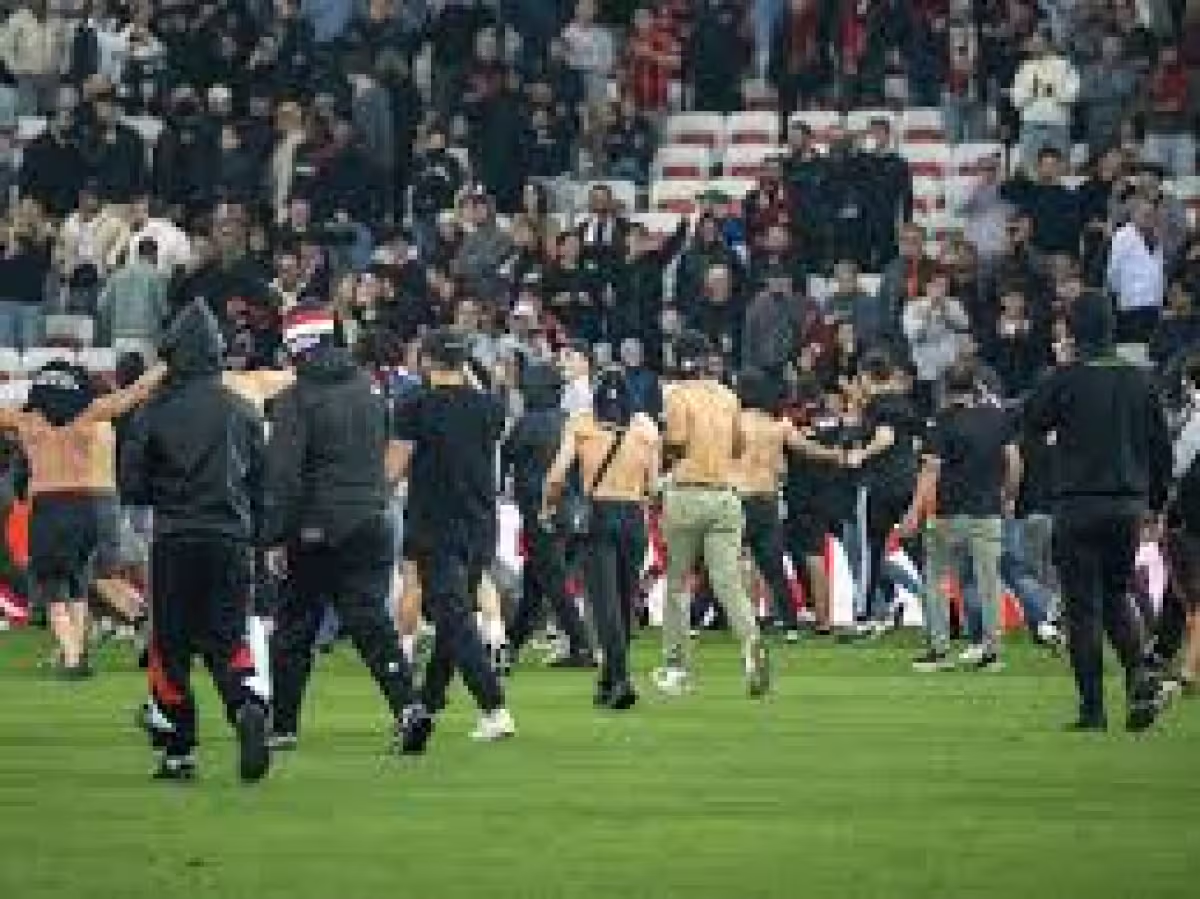
Philippe Diallo called it “a super final in a stadium that will be full,” and said the audience record showed “the football we love” and “the magic of the Coupe de France.” He said more than 1 million viewers had watched since the 7th round. That popularity sat alongside a harder note from Rivère, who condemned incidents in Paris as “intolerable” and “unacceptable,” saying they damaged football’s image and leaving him “dépité” to hear what had happened the night before. In a final built on celebration, that reminder hung over the occasion.
What happened on the pitch would decide the trophy, but the wider consequences were already clear: one result for Lens, one for Nice, and a chain reaction for Rennes and Monaco that made this final matter well beyond the 90 minutes.