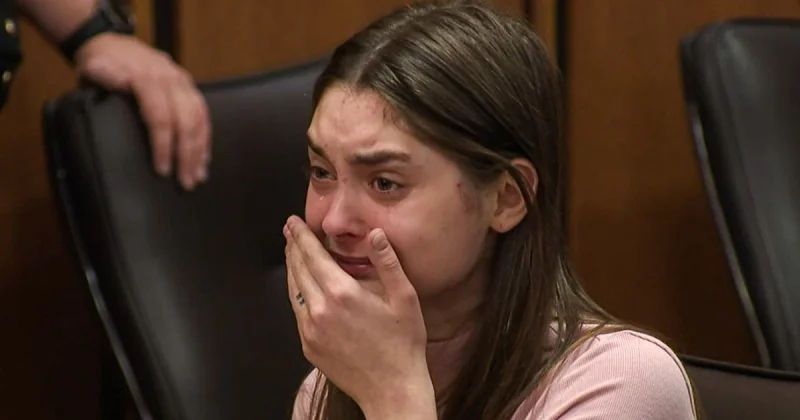
Netflix has released The Crash, a true-crime documentary about the case of Mackenzie Shirilla, the Ohio teenager convicted of killing two passengers when her Toyota Camry slammed into a brick building in Strongsville before dawn on July 31, 2022.
The crash happened around 5:30 a.m. and investigators said the car was moving at about 100 mph when it hit the building. Dominic Russo, 20, was in the front passenger seat and died there. Davion Flanagan, 19, was in the back seat and also died. Shirilla was later convicted in a 2023 bench trial and sentenced to 15 years to life in prison.
The documentary puts the case back in public view because it does more than replay the wreck. It returns to the fight over whether Shirilla lost control or drove into the building on purpose. Her defense said postural orthostatic tachycardia syndrome caused her to pass out at the wheel. In the film, Shirilla says she has no memory of the event. Police and prosecutors, however, believed she acted intentionally and charged her with multiple counts of murder.
That divide runs through the film’s central evidence. Assistant prosecutor Tim Troup said Russo called his mother two weeks before the crash asking for help because Shirilla was driving erratically and dangerously. A family friend said he heard Shirilla threaten to crash the vehicle. Shirilla’s mother later challenged that account by showing filmmakers text messages in which Shirilla asked Christine Russo to pick up her son after he allegedly tried to grab the wheel.
The scene that investigators described was even starker. First responders found marijuana in Shirilla’s purse and psilocybin mushrooms on her person when they arrived. A later toxicology report found THC in her system but no psilocybin or alcohol. Ryan said a recording system in Shirilla’s car captured approximately five seconds of pre-crash data, and that during that span the gas pedal was pushed to the floor with no attempt to brake. He said that around three seconds before impact there was steering input, including right movement, left movement and then a hard right movement, and that the car shifted from drive into neutral and back into drive again.
The documentary also frames the case through someone who knows what surviving a crash can do to a family. Gareth Johnson, who was 18 in 1992 when he was a passenger in a deadly car crash and suffered three shattered vertebrae, said he wanted to understand the other side of trauma. He said he could see the ripple effects on family and friends and felt he had the easier ride because the damage around him was so severe. That perspective gives the film a second current: not just how a crash happens, but how it keeps going afterward.
Police arrested Shirilla on Nov. 4, 2022, and the case moved quickly from roadside tragedy to courtroom certainty. Netflix is now giving viewers a fresh look at the evidence, the conflicting explanations and the record that ended with a judge finding Shirilla guilty on all charges. The documentary does not reopen the verdict, but it does sharpen the question behind it: whether the wreck was a collapse, as her defense argued, or a deliberate act backed by the data investigators say they found.