


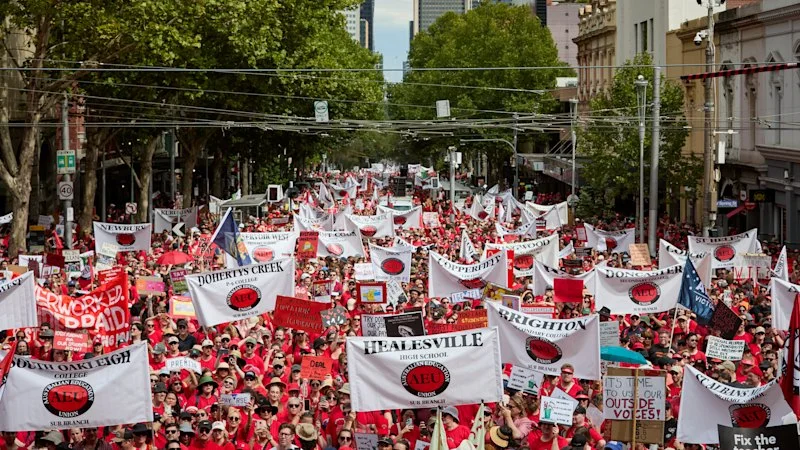
Victoria’s teachers’ union has struck an in-principle $4.6 billion deal with the Allan government that would lift pay by up to 32.4 per cent over four years, and the union’s Victorian Branch Council voted on Friday afternoon to endorse it.
The Australian Education Union Victorian Branch Council’s decision clears the way for leaders to try to win over the union’s 60,000 members in a ballot, while half-day strikes planned across Victoria through May and June stay on hold. Premier Jacinta Allan said the agreement would make Victoria’s teachers “the best paid in the country.”
The offer is big enough to reshape pay across the state’s public schools, but not in the way all teachers had wanted. The 32.4 per cent figure applies only to teachers at the bottom of the scale, while the increase falls to 28.3 per cent for those in the upper brackets. Under the deal, an experienced teacher’s salary would rise from $118,063 to $151,419 by 2029, according to the union.
Union secretary Justin Mullaly said the proposal met the core aim of the bargaining campaign: to move teachers away from the bottom of the national pay pack. He said a Victorian teacher at the top of the scale would overtake a New South Wales counterpart by October and described the offer as a strong outcome for members. Education Minister Ben Carroll said the package would cost $4.6 billion over the life of the agreement if it is endorsed by the union rank-and-file.
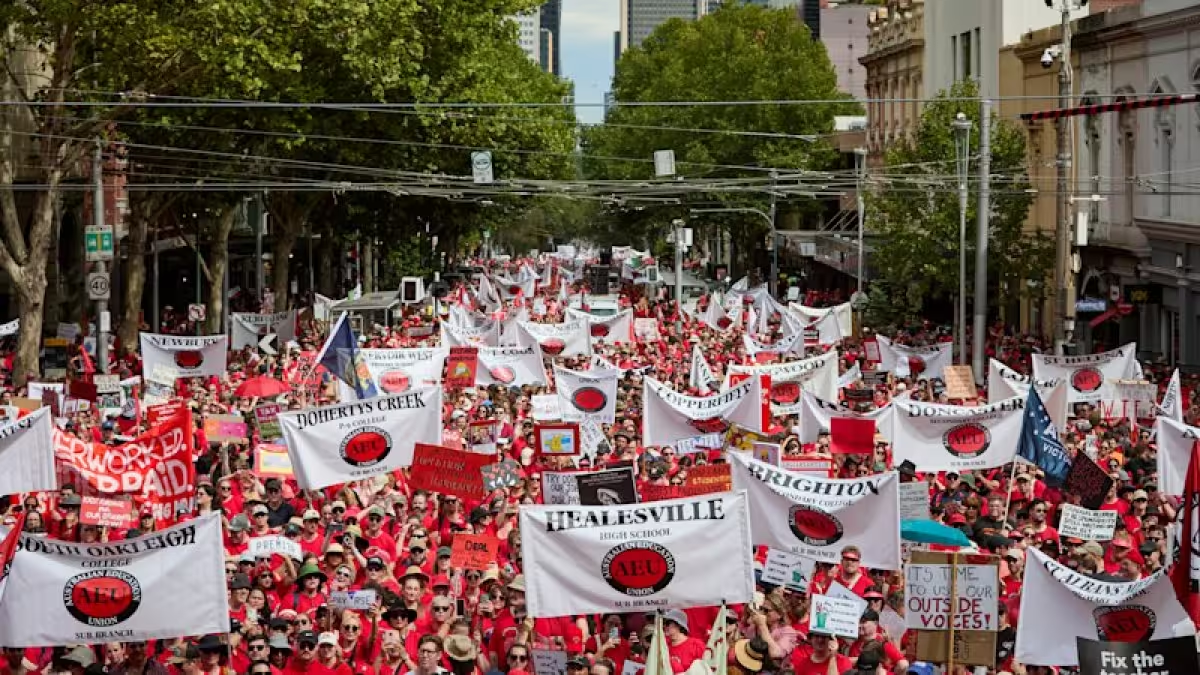
The broader dispute has been running alongside frustration over classroom conditions and chronic underfunding in Victorian public schools. Teachers, principals and education support workers walked out of classrooms in March and protested in Melbourne’s CBD, while the union’s log of claims called for a 35 per cent pay rise over three years and a cut in face-to-face teaching time. The deal does not include that workload demand, though it does add three student-free days a year on top of the current five.
Victoria’s schools are still funded at nine to 10 per cent below the full Schooling Resource Standard, which means the pay breakthrough does not settle the longer fight over how the system is financed. The offer would also count toward Victoria’s share of any future Commonwealth agreement to fully fund schools to the Gonski standard. For now, the immediate question is whether 60,000 teachers will accept a deal that raises pay sharply but leaves workload and funding battles for another round.