


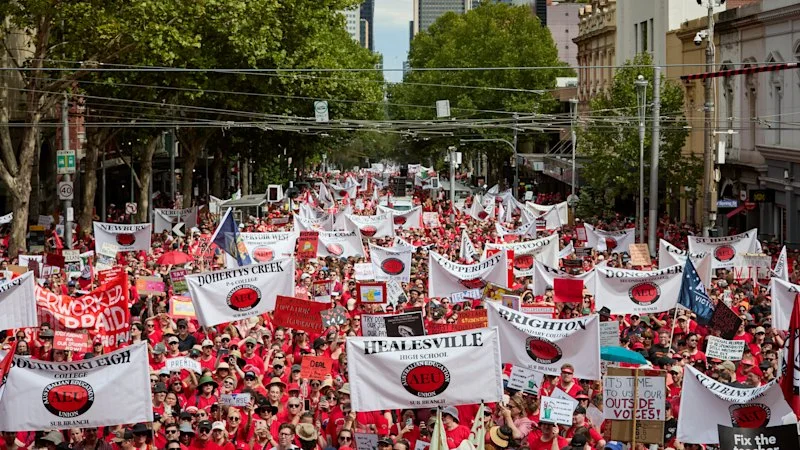
The Victorian government says it is hopeful a new pay offer to public school teachers will be enough to avert further strike action, as the Australian Education Union’s branch council weighs a proposal worth up to 32 per cent over four years. The union’s Victorian Branch Council was meeting at its Abbotsford headquarters early Friday morning, with branch president Justin Mullaly expected to brief reporters shortly.
Sources in the room said the offer on the table is for pay rises of between 28 and 32 per cent across four years, a significant shift in a dispute that has already tested relations between the state and its public school workforce. The government is pushing for a deal because it wants the offer to settle the conflict before teachers move again to industrial action.
Industrial Relations Minister Jaclyn Symes said on Friday the government was locked in “very productive” talks with the union. “They are thrashing out the negotiations and having very productive conversations that hopefully we’ll hear more about when they have finished the conversations that they’re having right now,” she said.
Symes added that negotiations were still under way and that she could not yet give an outcome. “It is my advice that negotiations are underway as we speak, but I’m obviously not able to provide an outcome of those discussions today, but I have been advised that they are productive, and we’re getting closer and closer,” she said.
The offer now being examined sits at the centre of a broader dispute over pay and conditions for Victorian public school teachers. The union’s branch council has been considering the proposal since early Friday morning, and the next signal from Mullaly is likely to show whether the two sides are close enough to lock in a settlement or still far apart on the numbers.
That is the pressure point for both sides. The government wants to bank a deal that heads off more strikes, while the union must decide whether a rise of as much as 32 per cent over four years is enough to send members back to work with the dispute resolved.
