Ecuador went to the polls on Sunday for local elections that will shape more than 5,000 offices, from mayors and prefects to municipal councils and parish boards, while flooding forced 34 polling sites to move at the last minute. About 13.8 million Ecuadorians were called to vote in a contest that opened at 07H00 and was due to close at 17H00, with the CNE saying there would be no quick count.
The vote matters now because the country is not just choosing neighborhood power brokers. Voters are also selecting the seven members of the body that will help name the attorney general, the comptroller, the ombudsman and other authorities, which makes the result part of the broader fight over how Ecuador’s institutions are staffed and controlled.

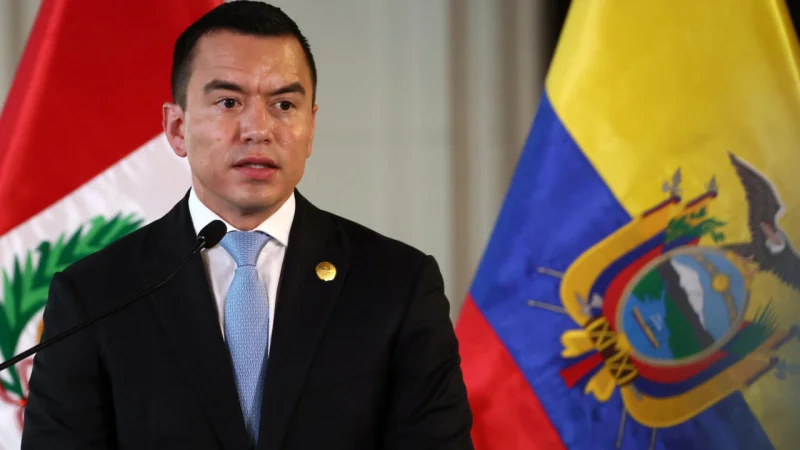
Daniel Noboa cast his ballot in Olón, in the province of Santa Elena, and tried to frame the day as one on which the government could work with whoever wins. He said the administration would have open arms to local authorities regardless of the result, and added that it had stood against criminality and against local governments that work against organized crime. For ADN, which is taking part in local elections for the first time, the vote is also a test of whether the president’s camp can turn national power into local footing.
But the election is happening under a cloud that the government has not dispelled. The opposition says the field was tilted before voting even began, arguing that its candidates were obstructed from running for mayor and prefect, that the CNE advanced elections originally due in 2027, and that Revolución Ciudadana was kept out. Alejandra said the process was “amañado,” accusing the authorities of moving the date forward, blocking parties from presenting candidates, attacking opponents and making changes to the rules. In the middle of the campaign, two candidates were shot dead in Huaquillas, a reminder that the vote was being held in a country where political competition can turn violent.
Luis Escola, 64, said he voted for the officialism and described the need for “fraccionamiento” as a problem. He said the country needs “a single team” across the cantonal, provincial and parish levels. That view fits the argument from the government side: that local authorities should align with the national fight against crime, not stand apart from it. The polling stations were still expected to close at 17H00, and with no quick count planned, the clearest answer will not come from headlines but from the final tally, which will show whether the CNE Ecuador ballot delivered a working map for local power or another layer of dispute over how that map was drawn.