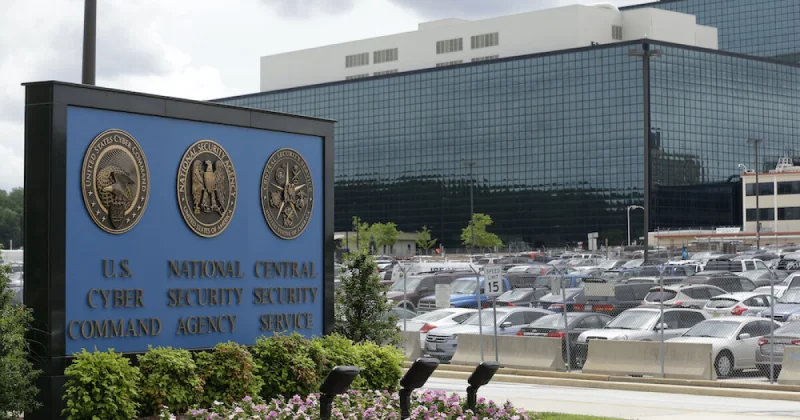
The deputy director of the National Security Agency has called China the biggest threat to US security, putting Washington's sharpest intelligence warning on the record just as a major diplomatic stage is taking shape in Shenzhen. The comment landed in a moment when the APEC summit is already drawing attention for the possibility of a first-ever trilateral meeting involving Xi Jinping, Donald Trump and Vladimir Putin.
That is why people are searching for Nsa now. The agency's warning is not a general line about competition; it is a direct answer to a question about the biggest threat to America, and it puts the word China at the center of the country's security debate. In plain terms, the assessment reflects a view that Beijing's reach can touch more than one lane of US power at once, from intelligence and technology to the wider strategic balance that shapes decisions in Washington.

The timing matters because China is preparing to host the APEC summit in Shenzhen, where that possible three-way meeting is expected to take centre stage. Chinese analysts say such a meeting could help build a new international consensus, particularly on the war in Ukraine, and that gives the gathering a larger diplomatic meaning than a routine summit. But the same reporting also says a major breakthrough remains unlikely, which leaves the event poised more as a test of political positioning than a venue for a clean deal.
That gap between expectation and outcome is part of the story. Washington faces pressure to show that Trump's foreign policy can still produce results, even as the prospect of a first-ever meeting involving Xi, Trump and Putin raises the stakes for every public statement around the summit. The security warning from the NSA sits awkwardly beside the diplomatic choreography: one side is describing China as the top threat, while the other is preparing a stage where China could help shape the conversation on Ukraine and the wider order.
For now, the clearest takeaway is that the summit in Shenzhen is doing two things at once. It is giving China a platform, and it is also forcing the United States to explain how a rival it sees as its biggest security threat can still be part of the answer to the world's biggest geopolitical problem.