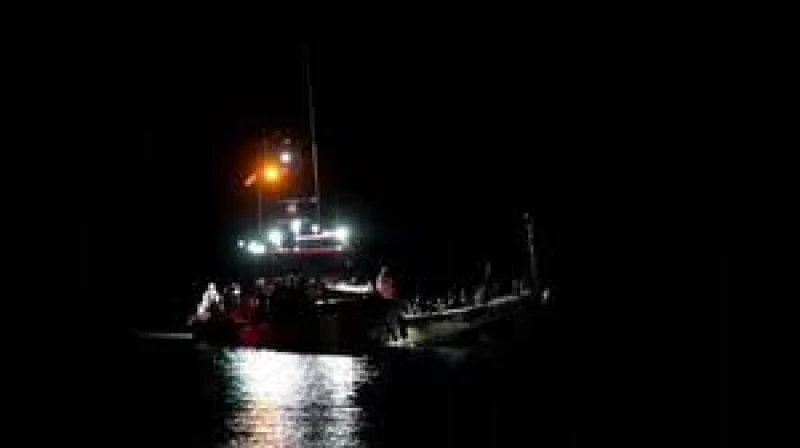
Salvamento Marítimo rescued 126 people from a cayuco late Tuesday night a short distance from La Restinga, as El Hierro was already under alert for the borrasca Charles. The rescue landed in the middle of another hard week for the island, where repeated arrivals have kept rescue crews, health workers and transfer teams moving without pause.
That is why Tuesday’s meeting between Fernando Clavijo and the Comisión Interministerial mattered beyond the immediate rescue. The talks produced commitments to reinforce health care, police presence and Salvamento Marítimo resources, while also speeding up transfers out of El Hierro. The agreed coordination will be weekly, a sign that the response is now being managed as a standing operation rather than a one-off emergency.

The urgency is not abstract. Between November 1 and November 10, the Government of the Canary Islands said 7,432 people arrived by sea in the Archipiélago, and La Restinga has taken the majority of them. On Thursday alone, 290 people arrived in five boats from Senegal after six days at sea, adding more weight to a system that has had to absorb rescue, medical care, identification and transfers at the same time.
What the meeting also exposed is the gap between recognition and readiness. The text says the Gobierno español and the Government of the Canary Islands can agree in advance what resources each side will provide and when they will be mobilized, yet reinforcements on El Hierro still depend on urgent letters, extraordinary meetings and emergency agreements. That leaves the Hospital Insular expected to treat people who arrive exhausted after days at sea while continuing to serve residents of El Hierro, a balance that only works if staff and reception spaces are already in place.
The next test is practical, not political: whether those weekly coordination meetings turn the promises made on Tuesday into more staff, more reception capacity and faster transfers before the next cayuco reaches La Restinga.