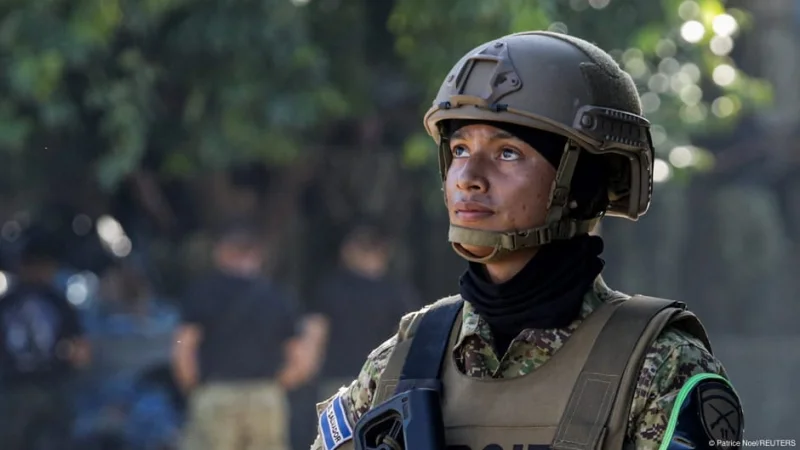
El Salvador has sent more than 2,000 troops and special forces to Haiti, widening its military footprint in a country already gripped by gang violence and raising fresh questions about who is really running the security effort there. The deployment, ordered last month by Nayib Bukele, was described as a mission to help rescue four Salvadorans who were ambushed on October 18 and have still not been found.
The move gives new weight to a security campaign that now spans land, air and foreign forces. Bukele said a joint task force between the two countries destroyed the house of Lanmo San Jou and the 400 Mawozo gang's headquarters, and he posted an unverified video that appeared to show helicopters firing on a sprawling property. That is the kind of claim that turns a military operation into a political signal, especially when the force involved is operating nearly 2,000 kilometers from home.

Alix Didier Fils-Aime has embraced that signal. On X, the Haitian prime minister thanked the Salvadorean military for what he called its commitment in the fight against gangs, saying Haiti and El Salvador were working alongside the UN-backed Gang Suppression Force to regain control of territory and restore state authority. For Fils-Aime, the message is clear: Haiti needs every armed partner it can get. For readers trying to understand the operation, the unanswered part is simpler and more troubling: who has authority over whom.
That gap matters because the rules are not fully visible. The GSF has been operating in Haiti since 2016, but the source does not spell out the formal arrangement that allows Salvadoran troops to operate there, or how those troops, Haitian authorities and the UN-backed force are supposed to coordinate in the field. Jake Johnston has warned that the lines between the different entities and security forces are a huge concern, while Romain Le Cour Grandmaison has said Haiti does not have the conditions to replicate the Salvadoran model. His point lands hard against the backdrop of a country where prisons were emptied in 2024, the justice system is largely paralyzed and armed groups behave more like militias.
The latest UN report, released on Thursday, underlines why this matters now. It said serious violations and abuses continue across Port-au-Prince, Artibonite and South-East departments, and that between July and September 2026 at least 1,167 people were killed and 459 injured. More than half of that violence came from ground or aerial operations by security forces against gangs, sometimes with support from a private military company using drones. The Salvadoran deployment is being sold as part of the answer, but the report shows just how destructive that answer can be when the chain of command is blurred and the battlefield is already crowded.