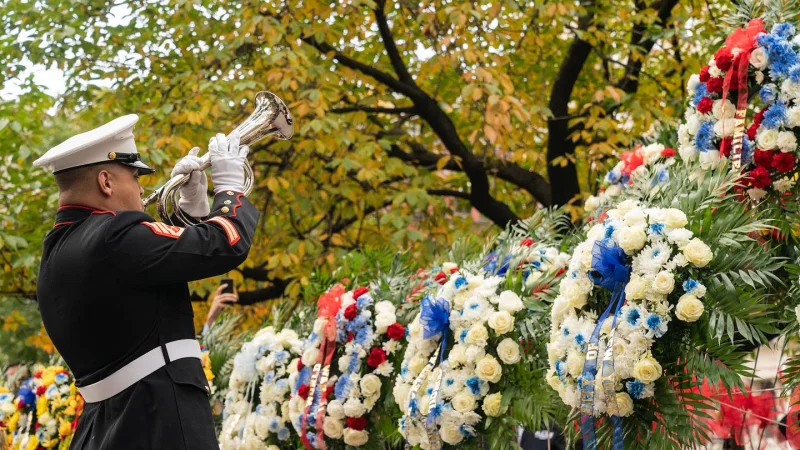
Modern-day Veterans Day in the United States grew out of the commemoration of the armistice signed between the Allied nations and Germany, the one that took effect at the 11th hour of the 11th day of the 11th month in 1918. That date still shapes how Americans mark Armistice Day, but the war’s end was not as clean as the calendar suggests.
That is part of why Edward G. Lengel says World War I is hard to understand and even harder to teach. He said most people are not interested in the war, and that the best way to make sense of it is to follow individual people rather than try to force one sweeping story onto it. For him, the lesson is not a slogan but a human one: men and women of all races and backgrounds were changed by the war whether they stayed home or went to the front, and there is no single narrative to read from it except the narrative of humanity.

Lengel said he began studying African military history because of the East African theatre in World War I, an episode that is often forgotten even though it spread far beyond one battlefield. Paul Emil von Lettow Vorbeck, commander of the Deutsche Ost-Afrika Schutztruppe in German East Africa, led raids into neighboring British East Africa that forced the British to divert troops to another theatre. The fighting pulled in several divisions’ worth of troops from Britain, South Africa, East Africa and India.
That is also why the armistice did not bring instant quiet everywhere. The ceasefire ended the fighting in Europe, but Lengel said the East African theatre kept going for a couple of weeks after the armistice. The explanation is simple and stubborn: a worldwide war did not stop everywhere at the same moment, even when the paper had been signed and the clocks had reached the 11th hour.
For readers searching Armistice Day now, that is the part worth holding onto. The holiday began with a precise moment of peace in 1918, but its meaning comes from a conflict that spread through Europe and East Africa alike, and from people whose experiences never fit neatly into a single ending.