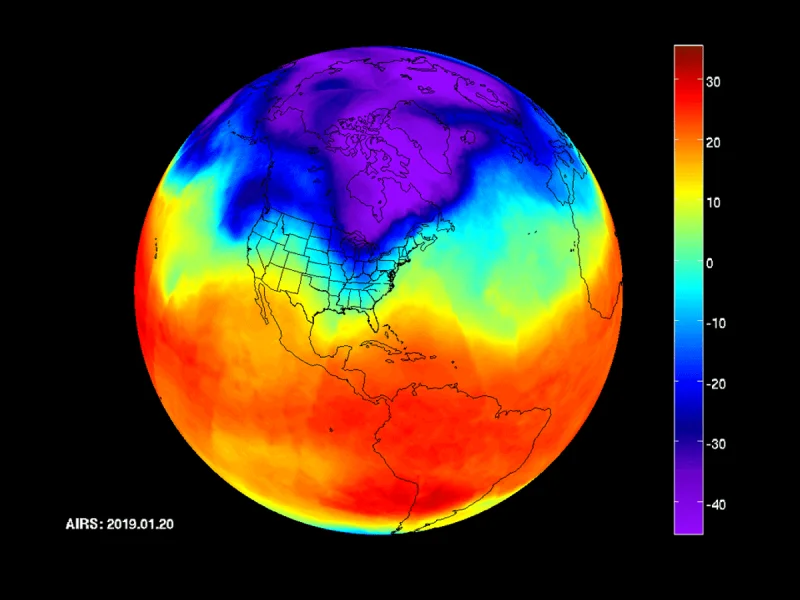
The Arctic polar vortex is collapsing, and climate experts say the disruption may be happening at the earliest point in the year on record. That matters because the vortex, a spinning mass of air high above the North Pole, helps keep cold air bottled up near the pole when it is tight and strong.
Judah Cohen said that when the vortex is disturbed, it can push cold air into other parts of the world, including North America and Europe. He said the unusual part is not just the breakdown itself, but how early it is happening, long before the season usually turns. For readers wondering why this is drawing attention now, it is because polar vortex disruptions normally occur deep into winter, not at a moment when the Northern Hemisphere is still moving toward its coldest stretch.
Andrea Lopez Lang said the polar vortex strengthens in the stratosphere every winter, a layer that stretches from about 10 to 30 miles above Earth’s surface. She said the vortex in the Northern Hemisphere typically begins forming in late summer and reaches peak intensity in December and January. In other words, the system is already acting ahead of schedule in a season when it should still be building, not breaking down. A related story on rare early winter weather has also pointed to the same setup: El Niño November Weather Forecast flags rare early polar vortex disruption.
The mechanics matter because the disruption does not stop in the stratosphere. Rossby waves can make the vortex wobble and weaken, and a big disruption can cause it to drift, stretch, split into multiple swirls or even change direction. That can indirectly influence the polar jet stream in the troposphere, the lowest layer of the atmosphere where most weather happens, opening the door for colder air to spill farther south than usual.
The friction point is that meteorologists had expected North American winter to be relatively mild because it is an El Niño year. Lopez Lang said it looks like a disruption is going to happen, but where everything sets up is still in question. Cohen added that there are minor and major sudden stratospheric warmings, and this one could end up either way. A polar vortex split could bring cooler temperatures across the continent in the coming weeks, but it is not yet clear whether this event will be strong enough to become one of the cold snaps people remember.
That uncertainty is what makes this early collapse so notable. Before now, the earliest recorded sudden stratospheric warming was November 28, 1968. If this event keeps unfolding as expected, it will not just be unusual. It will set a new mark for how early the polar atmosphere can turn unstable, and the real test will be whether that disturbance stays minor or grows into something that rearranges weather across North America and Europe.