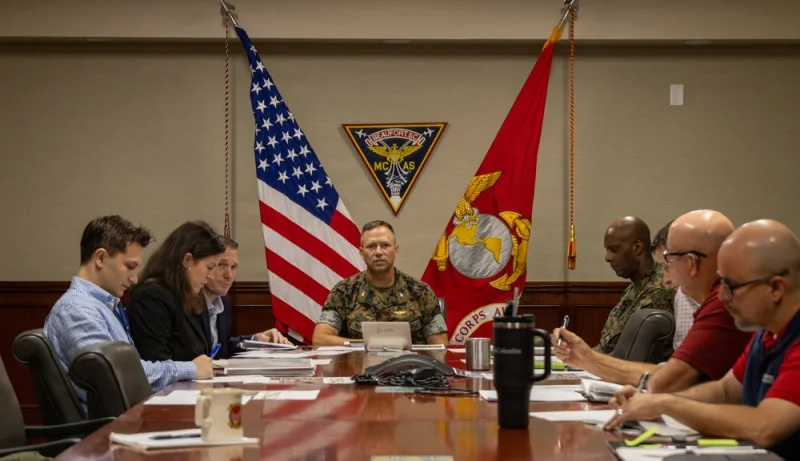
Dakota Meyer says the Pentagon’s barracks overhaul is running into conditions far worse than a routine maintenance backlog. While touring military installations for the Pentagon's Barracks Task Force, he said he has found mold, no hot water and broken air conditioning in housing used by service members across the Army, Navy, Air Force and Marine Corps.
The scale of the tour gives the complaints added weight. Meyer said he has already visited more than eight installations and plans to reach 30 before the end of the year, a pace that has made the problem look less like a few isolated failures and more like a department-wide one. He serves as senior adviser to the Pentagon's Barracks Task Force, and he said Pete Hegseth expects him to fix the barracks problem.
Meyer said the living conditions he has seen have been hard to ignore. One 19-year-old service member told him she would want a hot shower if she could wave a magic wand, and Meyer said some troops have gone a year without hot water. He also said some are sleeping in their cars to get away from barracks without air conditioning, while others are asking for drywall, spackle and paint so they can make repairs themselves.

He said only a couple of the barracks he has seen are good. That is the part that makes the effort more than a facilities review. What he described was not a row of minor defects but a housing system that leaves young service members making do with workarounds that should not be theirs to solve. Meyer said, “What I thought was gonna be a professional job very quickly turned into personal,” and added, “It’s absolutely heartbreaking.”
The problems long predate Hegseth. A 2023 Government Accountability Office investigation found serious health and safety hazards in the department’s barracks, said the Pentagon lacked reliable information on the condition of its own housing, and concluded it could not determine how much facilities spending went to barracks. It also found insufficient oversight, and as of this year 12 of 31 recommendations remained outstanding, even after Congress and the military services committed billions toward improvements.
That is why the task force matters now: the Pentagon is trying to centralize a fix, but Meyer’s inspections are showing how uneven the starting point still is. Marine Corps' Barracks 2030 and the Navy’s unaccompanied housing overhaul were meant to push the work forward, yet the reports from the field keep landing on the same basics. Meyer said Hegseth told him to fix the problem, not just study it, and that is the test now — whether the task force can turn a long record of promises into hot water, working air conditioning and barracks people can actually live in.