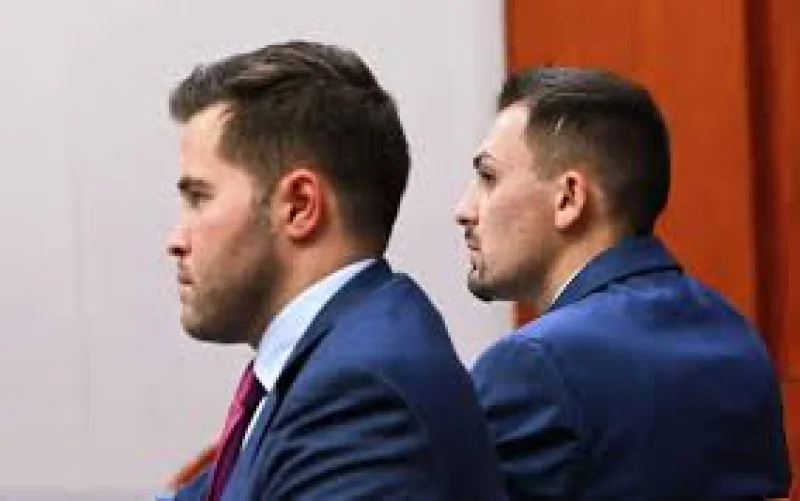
Cooper Ouellette told the judge on Thursday that he would exercise his right to remain silent, ending any doubt that he would take the stand in his own defense in the trial over Sophie Ringquist’s death. His lawyers had already said before resting their case that he would not testify.
The decision matters now because the defense has finished presenting its case and closing arguments were set for Friday morning. Ouellette has pleaded not guilty to vehicular manslaughter and to selling or delivering alcohol to a minor, charges tied to a night that prosecutors say ended with Ringquist being tossed from his truck twice while he was driving her home.
That account has been disputed from the start. Ouellette was 18 when Ringquist died and is now 21, and the case has turned on which version of events the jury believes: prosecutors’ claim that he caused her fatal fall, or his claim that she jumped from the vehicle before he could stop. He also told Ringquist’s mother and investigators that she had been drunk and said she needed to vomit, then told police that he went to pull over but did not get the chance before she jumped.

Testimony in the trial filled in pieces of that night. Ouellette arrived at Ringquist’s home on May 20, 2023, with a bloody nose and was slumped over in the front passenger seat. Ringquist’s mother said one of her daughter’s front teeth was chipped when she was brought home, a detail that fit the family’s immediate concern that something far more serious had happened than a simple fall.
The defense, meanwhile, has tried to push the jury toward uncertainty about the physical evidence. Investigators never tested Ouellette’s blood for alcohol, even though Connecticut State Police Detective Ryan Slaiby said the lack of testing came because too much time had passed by the time investigators reached his home. Police also never examined Ringquist’s clothing for markings or patterns that would show whether a tire had rolled over her, a gap the defense used to question the state’s theory of how she was thrown from the truck.
That omission sits beside testimony from defense witnesses who said Ringquist had been drinking that night, and from two friends who said they saw her with drinks in Ouellette’s truck and did not see signs that he was intoxicated. Prosecutors, however, have maintained that Ringquist was tossed from the truck twice, keeping the jury focused on whether the fatal injury came from a crash, a fall or something in between.
For now, the most consequential answer is already in: Ouellette will not speak to the jury himself. That leaves the case to close on the evidence already heard, with the verdict likely to turn on whether jurors think the missing alcohol test and the untested clothing weaken the state’s account enough to create reasonable doubt.