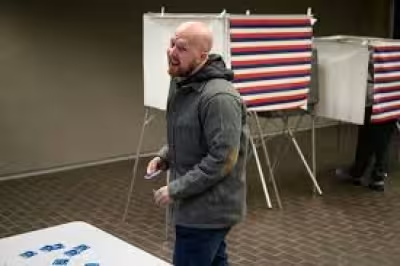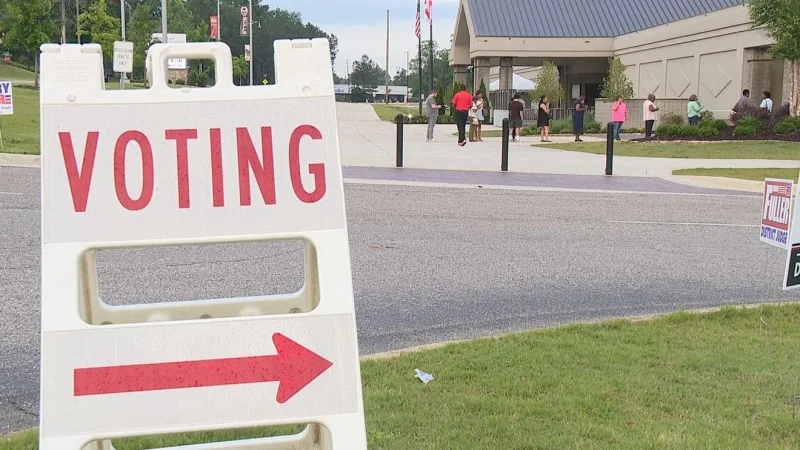
Alabama voters go to the polls Tuesday to choose their next governor and U.S. senator, and to decide four proposed constitutional amendments that will affect every ballot in the state. Polls in central Alabama are open from 7 a.m. to 7 p.m. Central time, and anyone still in line at 7 p.m. can vote.
The race-top ballot is not the only thing drawing attention. Every Alabama ballot includes statewide contests for governor, U.S. Senate, lieutenant governor, attorney general, secretary of state, state treasurer, state auditor, commissioner of agriculture and industries, and two Public Service Commission seats. Voters statewide will also choose a justice for Place 8 on the Alabama Supreme Court, and some will see a State Board of Education race as well.
That is why the search for Alabama elections 2026 is peaking now: Tuesday is the only day that matters for casting a regular ballot, and the registration deadline passed on Oct. 19. Voters can still check AlabamaVotes.gov for their registration, polling place and sample ballot, and they may bring a marked sample ballot into the polling place for personal use.
The ballot is not identical everywhere. District 2 voters choose between Jamie McCurry and Tracie West, while District 6 voters choose between Angela Morgan and Cathi Bradford. In the State House, voters in District 15 pick between Nell Brown and Leigh Hulsey, District 16 between Christian Martin and Bryan Brinyark, District 32 between Debra D. Foster and Joey Callahan, District 35 between Steve Hurst and Joseph Cleveland, District 40 between Pam Howard and Chad Robertson, District 41 between David J.A. Morgan and Corley Ellis, and District 43 between Taylor Cook and Arnold Mooney.

Photo ID rules still matter at the door. Voters must show an approved photo ID, such as an Alabama driver’s license or non-driver ID, an Alabama photo voter ID, a U.S. passport, military or tribal ID, or certain government or college IDs. But a voter whose name is on the poll list and who does not have an approved ID can still cast a regular ballot if two election officials positively identify them. If they do not, that voter may cast a provisional ballot instead.
That fallback is not the end of the process. Provisional ballots are reviewed after Election Day, and voters whose ballots are provisional because of missing ID have until 5 p.m. Friday, Nov. 6, to take an acceptable ID to the Board of Registrars so the ballot can be counted. If a voter’s name is not on the list, the next step is to ask a poll worker to contact the county Board of Registrars, and a provisional ballot may still be available if eligibility cannot be confirmed at the polling place.
Absentee voting is largely closed off for latecomers. Regular absentee application deadlines have passed, and a mailed absentee ballot must be received by the county absentee election manager by noon Tuesday. Voters who asked for an absentee ballot but never got it, or never returned it, may ask to cast a provisional ballot in person.
In the end, Tuesday is about more than a single statewide headline race. It is a one-day test of turnout, paperwork and district-by-district choices, with the shape of the ballot changing by county and legislative district and the next move for some voters depending on whether their ID or their registration can be verified at the table.