Takahisa Zeze says he keeps making films because, to him, moviemaking is the same as living. At this year's Tokyo International Film Festival, the veteran director used a masterclass and interview to argue that each new project teaches him something about the world — and leaves him feeling as if he has learned a secret he could not have found any other way.
That is why the renewed attention around Sukiyaki lands now. Zeze made the film because he was drawn to the life of the man at its center, Kyu Sakamoto, whose 1961 song Ue o Muite Arukō became a Billboard-topping hit. Zeze said Sakamoto suffered depression and diabetes in his later years, yet kept working on music anyway, and he wanted the film to connect life and death while showing how people can move through the fear of death rather than freeze before it.

Zeze is not speaking from the outside. He began in Japan's pornographic pink film industry as a writer and assistant director, became one of the Four Heavenly Kings of Pink, and later made some of the darkest, finest Japanese thrillers of the 1990s. He said he now puts out about one work a year, a pace that makes his comments at the festival feel less like a promotional pitch than a working artist explaining the method that has carried him across decades.
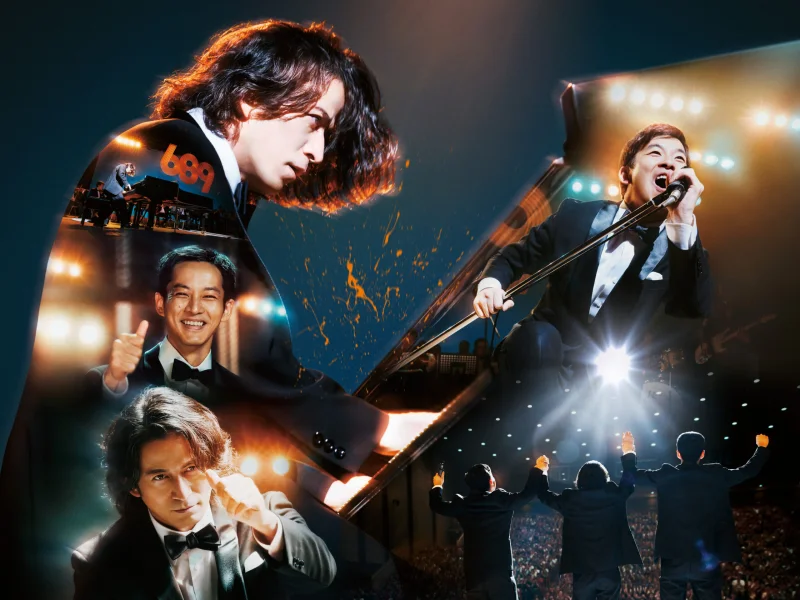
That helps explain why Sukiyaki drew such a response even though it has not been treated as the best film at the festival. It is strong and moving as an opener, in part because Zeze pushes the material toward feeling rather than outline: the song, the illness, the persistence, the awareness of death in the same frame as creation. The film is a biopic of the three men who shaped Ue o Muite Arukō, and that structure gives the story its pull even when the movie itself does not feel like a masterpiece.
The sold-out New York premiere at Japan Society on November 11 adds another layer. An audience that cannot get into the screening is already being asked to meet Zeze's latest work as more than a festival title, while All That Exists, with Hidetoshi Nishijima and Suzu Hirose, is set to open domestically on February 5. For Zeze, whose career has moved from pink cinema to mainstream filmmaking without losing its edge, the larger pattern is clear: he is still making movies as if each one might teach him something new, and Sukiyaki is the latest proof.