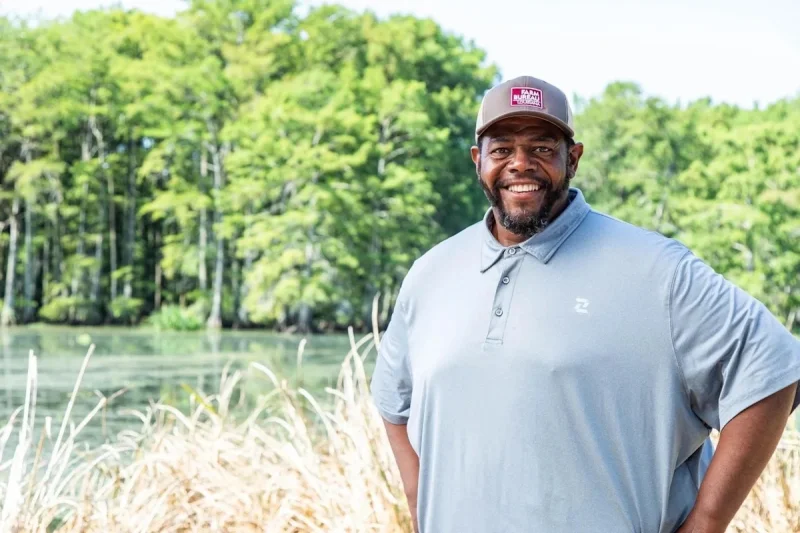
Jamie Davis is suddenly running almost even with Julia Letlow in Louisiana’s race for the United States Senate, turning what looked like an easy Republican hold into a contest worth watching. Recent polling shows Davis trailing by just four points at the start of early voting.
That shift matters now because Davis is not a familiar political figure backed by the usual machinery. He is a Black farmer from northeastern Louisiana, and his campaign is built around the problems he says have been hitting farmers, from tariffs to policies he argues have made the business harder. At the time The Prospect spoke with him at the beginning of the early voting period, Trump was preparing a tele-rally for Letlow, while pro-Letlow super PACs were already running attack ads against Davis.
Davis says he decided last year, in the fall, to run for the United States Senate after looking at what was happening on his own farm. He joked that he still had to get a permission slip from his wife, but his complaint was serious. His best 2025 crop, he said, averaged 1,300 pounds of cotton per acre, 150 bushels of corn per acre and 50 bushels of beans per acre, and he still ended up in the black. For him, that was the evidence that something in the farm economy was going wrong.

“It was because of tariffs and policies that had been hurting farmers for quite some time during this administration, and I just decided to step up and make a run,” Davis said. He has also made regulating data center development and expansion in Louisiana one of his top priorities, along with easing the cost-of-living squeeze and passing legislation that supports farmers. That mix gives him a message aimed well beyond agriculture, but farming remains the place where his campaign starts.
The race was expected to be far less competitive. Letlow had Trump’s endorsement, a high-profile primary defeat of Bill Cassidy and broader name recognition across Louisiana, while Davis was carrying a campaign that leans on contrast with corporate PAC money. Yet the polling has kept him in striking distance, and that has made the contest more consequential than many expected. If Davis pulls off the upset, he would become Louisiana’s first Black senator ever.
That possibility also gives the state a historical edge that reaches back to Reconstruction. During that era, the Louisiana state legislature selected P. B. S. Pinchback to serve, but he was never seated because of a voting challenge. Davis is not running as a historical symbol, but his candidacy now carries that weight anyway, as the state heads toward a Senate result that could reshape expectations for both parties.