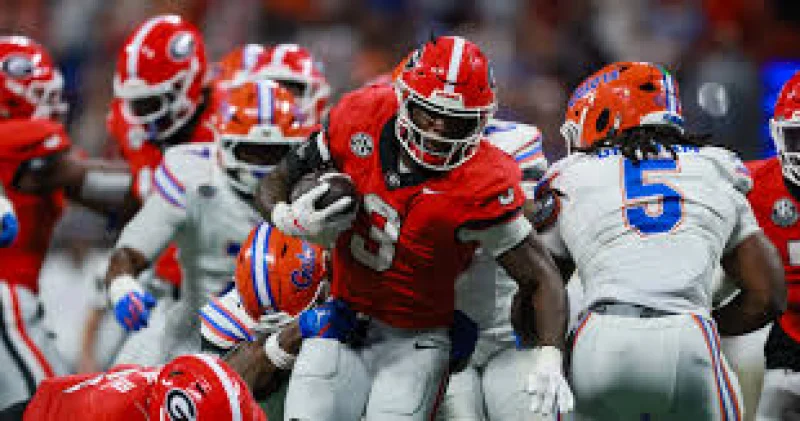
Kirby Smart put college football’s pay-and-practice fight back in the spotlight after Georgia’s 27-8 win over Florida. Asked about the injuries his team is dealing with, he said players are practicing less, getting hurt more and making far more money than he did until he was 40.
Smart did not couch it as a small shift. He said he thinks back to the Georgia teams from ’21 and ’22 and how physical they were, then added that the current group cannot come close to that standard. He also said some of the difference may be cultural, asking whether players simply do not want it as much as before, and he pointed to the money now flowing through the sport as part of the change.

The numbers matter because they frame just how much the game has moved. Smart’s point was not that players are merely earning a little more than past generations. He said a lot of them make more now than he did until age 40, a line that landed because it came from one of the sport’s most successful coaches after a game in which Georgia was still managing injuries. That makes his comments more than a gripe about one roster; it is a blunt description of how NIL has changed the economics around a locker room.
At the same time, the broader picture is messier than Smart’s critique suggests. NIL and the transfer portal have also made it easier for programs to reset quickly, and for players who once might have sat behind stars at Alabama or Ohio State to move and get paid elsewhere. Brooks Austin argued the portal, not NIL, is the real force behind parity, while Curt Cignetti and Bob Chesney were cited as examples of how quickly coaches can remake a program or turn one into a contender. In that sense, the same system Smart says is softening practice habits is also making the sport more fluid and more competitive.
That is why his remarks drew blowback. Some of the reaction pointed out that coaches have long benefited from a business in which loyalty and commitment were often flexible when money or opportunity changed. Smart’s criticism may resonate with anyone who thinks the old grind has been diluted, but it also lands in a college football era built on player mobility and compensation. The sharper question now is not whether the sport has changed. It is how much of what Smart is seeing on Georgia’s sideline is a real shift in standards, and how much is the cost of a game that has rewritten its own rules.