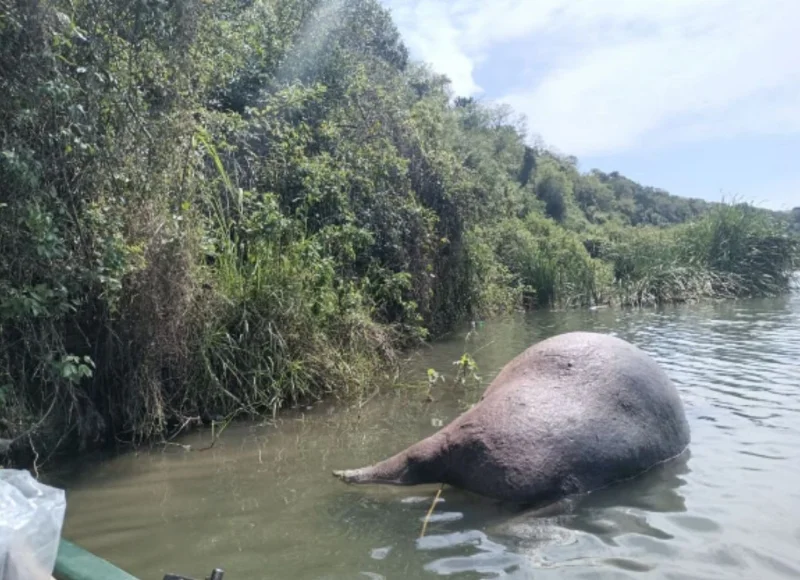
An anthrax outbreak has killed 28 hippos in Virunga National Park in eastern Democratic Republic of the Congo, bringing fresh losses to a population already under pressure. The dead animals were reported in the Semuliki River area, and park management has warned communities living near the river and Lake Edward to stay away from carcasses and infected bushmeat.
The new deaths matter because Virunga still holds an estimated over 2,700 hippos in 171 groups, and each loss has a wider effect than a body count suggests. Joël Mbusa Mapoli has described these animals as drivers of nutrient flows across aquatic and terrestrial boundaries, a reminder that hippos are not only emblematic wildlife but part of the park’s ecological machinery.
The outbreak also lands with an ugly sense of familiarity. Last year, anthrax killed 65 hippos in the same park, and conservation teams have had to use excavators to pull heavy carcasses out of the water after a previous outbreak. Anthrax is a spore-forming bacterium that can lurk silently in deserted soil for decades, which helps explain why repeated flare-ups can return even after the dead animals are removed.

That danger is amplified by the ground reality in Virunga. Park authorities say they lost direct control over a substantial chunk of the territory over the last four years because of fighting between the Congolese army and M23 insurgent groups. Olivier Ndoole Bahemuke has warned that prolonged insecurity completely shreds the institutional safety nets meant to protect both people and nature, and the outbreak now exposes how fragile those protections have become.
The immediate public-health warning is plain: handling dead wildlife, skinning carcasses, or eating bushmeat infected with the bacteria can put human lives at risk. What remains unresolved is how much of the current outbreak can be contained while access to parts of the park remains constrained, because in Virunga the disease problem and the security problem are now feeding each other.
For readers following the wider story, the pattern is no longer an isolated wildlife incident but a recurring test of a park that is trying to protect animals, communities and access to water in the same place. In that sense, the latest anthrax deaths are not just another outbreak; they are another sign that the park’s next crisis may arrive before the last one is fully under control.