A 20-year-old U.S. Marine stationed in Okinawa was indicted in Japan on robbery and murder charges Sunday in the death of a woman found strangled in a hotel in Naha City. Prosecutors moved forward against LCpl. Devin Jacob Ballard in a case that has already spilled far beyond the courtroom, drawing anger in Okinawa and in Tokyo.
The victim was identified as 39-year-old Anna Yagi, a resident of Naha City. Authorities said Ballard is accused of wrapping a telephone receiver cord around her neck at a hotel in Naha City on Oct. 3, then stealing a backpack containing her wallet and other belongings. Security footage allegedly placed him at the hotel around the time of the killing, and investigators said the video showed a person who appeared to be foreign entering with a woman and later leaving with her belongings. Police said the man resembled Ballard, including in hairstyle and tattoos, and some of Yagi’s belongings were later found abandoned near the hotel.

That combination of video, recovered items and investigators’ account appears to have been enough for prosecutors to bring the case to indictment, even though the public record does not spell out every detail they relied on. The prosecution has not disclosed whether Ballard has made incriminating statements, but police said he denied the allegations when questioned at the time of his arrest. According to NHK, he said, “I don’t know anything about it.”
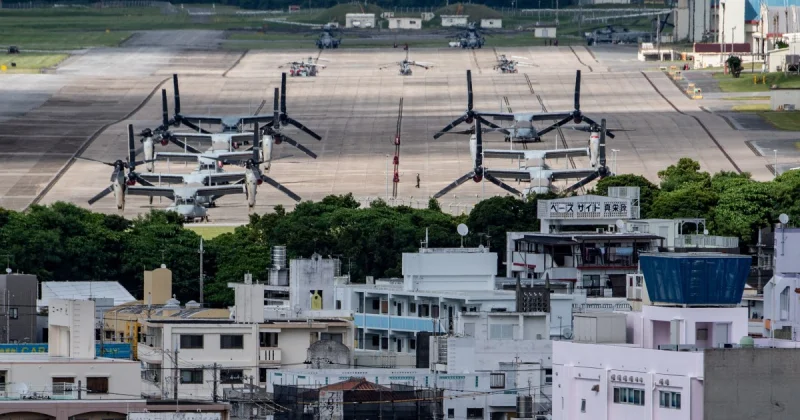
Investigators said the story did not end there. During later questioning, Ballard made statements that partially hinted at his involvement in the incident, a development that gives the case its sharpest contradiction: a denial at arrest, then remarks that investigators say edged toward admission without reaching one. Ballard is assigned to the III Marine Expeditionary Force at Futenma Air Base in Okinawa, and ABC News said the force would not release further personal or administrative details to protect the integrity of the ongoing investigation and comply with privacy rules.
The indictment comes after the Japanese government lodged what Sanae Takaichi called a strong protest to the U.S. side, saying the incident was “an extremely brutal and heinous” one and a matter of profound regret. The case has also ignited protests in Okinawa and on the mainland of Japan in Tokyo, turning one hotel killing into a broader test of how Japan handles a criminal case involving a U.S. service member. What prosecutors present next will matter less for the charge sheet than for the unanswered gap that still hangs over it: what, beyond the footage and the recovered belongings, persuaded them to formally say this was robbery and murder.