Houston police raided the 101 Poker Club in Katy, Texas, with guns drawn on Thursday, seized $118,000 and arrested four people in a move that put one of the Houston area’s poker rooms back under scrutiny. By Saturday, the room was open again.
The Houston Police Department said on social media that its Vice Division and the Harris County District Attorney’s Office had seized funds and arrested four suspects charged with engaging in organized criminal activity on Thursday, Oct. 22. Those arrested were Stephen Hohman, Brian Keegan, Laura Respondek and Randolph Reynolds.
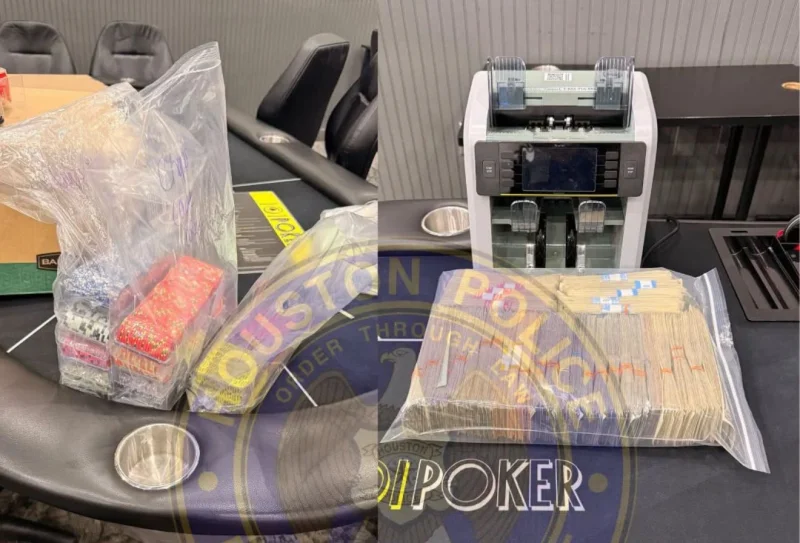
Police released photos showing multiple poker games underway when officers entered, along with images of seized chips, cash and a money counting machine. PokerNews reported that players were immediately let go, while dealers and staff were detained, and that at least one staff member was arrested during the raid.

That detail matters because the club’s legal exposure appears to turn on how the games were run, not on poker itself. Sources told PokerNews that 101 Poker Club charged membership fees and had been taking chips out of pots, a practice that can cross the line under Texas gambling rules if a rake is collected. In that framework, the difference between a lawful card room and an illegal gambling operation can come down to how the house makes money.
The speed of the reopening sharpened the conflict. The club was back in business less than 24 hours after the raid, even as police said charges were pending against a fifth unnamed suspect. That leaves the next step squarely with prosecutors, who will have to decide whether the evidence from Thursday is enough to expand the case beyond the four arrests already announced.
The raid also fits a broader crackdown on Houston area poker rooms that police say are skirting the law. Another room, Lucky J Social Club, was raided in May and quickly reopened, and the 101 Poker Club’s fast return suggests this fight is no longer just about one room in Katy. It is about how far Texas law will let poker rooms go before police treat them as organized criminal enterprises.