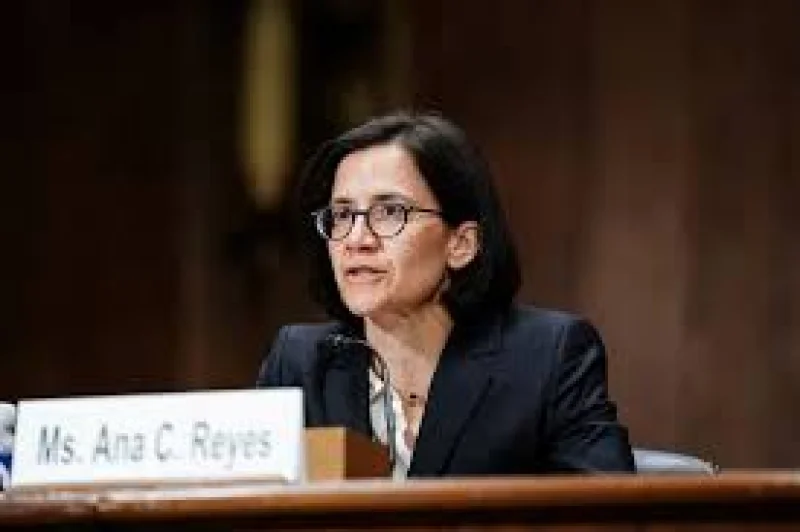
Judge Ana C. Reyes moved the golf course fight into live testimony on October 19, 2026, holding an evidentiary hearing over President Trump’s attempt to replace a historic municipal golf course with a Trump-style championship course. By day’s end, she had the government back on the clock, ordering it to explain by 8pm whether it still stood by the position it took two days earlier.
The hearing drew the kind of attention that comes when a case stops being abstract and starts turning on witnesses. Senior Editors Roger Parloff and Molly Roberts live-blogged from the media room of the E. Barrett Prettyman U.S. Courthouse in Washington, D.C., as Reyes heard from Gregory Wischer, Jessica Bowron and Kevin Griess. Wischer is the deputy chief of staff of the Department of Interior, Bowron is the acting director of the National Parks Service, and Griess is the superintendent of National Mall and Memorial Parks.

That testimony mattered because the golf course at the center of the dispute is not an ordinary parcel. It has been described as a historic municipal course open to people of all skill levels for a nominal fee, and the question before Reyes is whether that public use can give way to a branded championship redesign. The hearing was also happening against a sharply shifting record: two days earlier, government attorneys had called the replacement plans conceptual, nascent and preliminary, yet Trump had said the existing course would be closed on Nov. 15 or earlier to make room for the replacement.
Reyes made clear she was not treating the case like a routine paper dispute. She denied a government request to recuse herself the night before, ordered Associate AG Stan Woodward to attend, and said she wanted Bowron and Wischer in court because the bare administrative record was not enough in what she called an exceptional situation. She also ordered Woodward to refile a submission from the night before with as many DOJ attorneys as would sign it, then gave him until 3pm to file a brief explaining why the DOJ attorneys should not respond to her order.
The result is a hearing that pushed the case past argument and into proof. Reyes has now forced the government to say, quickly and on the record, whether it still means what it said two days ago. If it does not, that gap may matter as much as the testimony itself.