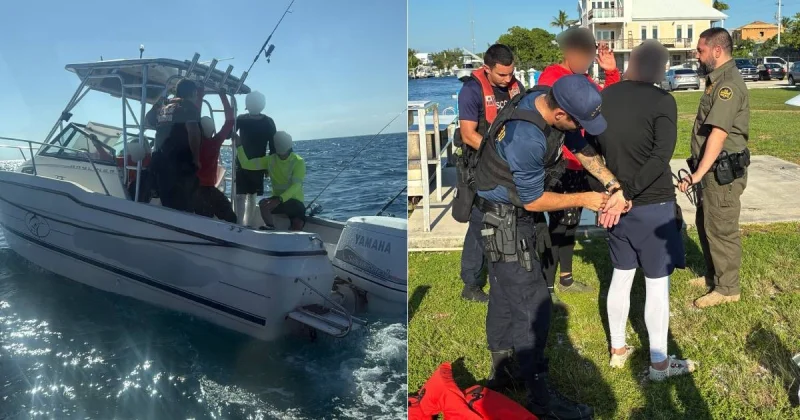
The United States Coast Guard detained two Cuban citizens denied asylum on Tuesday, Oct. 13, during a routine safety inspection of a recreational boat in the Florida Keys, then handed them to Border Patrol for processing.
The stop happened aboard a Bayliner with a Yamaha engine and was carried out by a crew from USCG Islamorada. In a brief account posted by the Guardia Costera del Distrito Sureste on X, the agency said both men had already received negative decisions on their asylum claims and were not legally authorized to remain in the United States.
That detail is what makes the case stand out. Rather than unfolding as one of the more common maritime interceptions in the Florida Strait, the encounter began as a standard safety check on a pleasure craft. The Coast Guard’s own account made clear why the inspection became a migration case: once officers identified the two occupants and confirmed they lacked legal status, the stop shifted from vessel safety to immigration enforcement.

The images released by the authorities show Coast Guard and Border Patrol agents during the detention of one of the Cubans, underscoring how quickly a routine marine inspection can turn into a federal processing case. The transfer also leaves the next step unresolved. The agencies said the two were passed to Border Patrol, but they did not say whether the men will be placed in immigration detention or removed to Cuba.
The timing matters because the detention came amid operativos migratorios recientes in the Cayos de Florida. In August, 11 Cuban migrants landed in Key West aboard a stolen boat, and in September Border Patrol said those 11 citizens had been detained and were being processed for deportation. Separately, on Oct. 13 the United States Coast Guard said it repatriated six people to Cuba after maritime interventions on Oct. 8 and Oct. 11, showing that enforcement in the region is moving on several fronts at once.
What remains open is not whether the two men were identified or transferred — that part is settled — but what federal authorities do with them next. For now, the Coast Guard has put them in Border Patrol custody, and the case is likely to be watched as another example of how a routine inspection in Islamorada can end in immigration processing instead of a simple safety check.