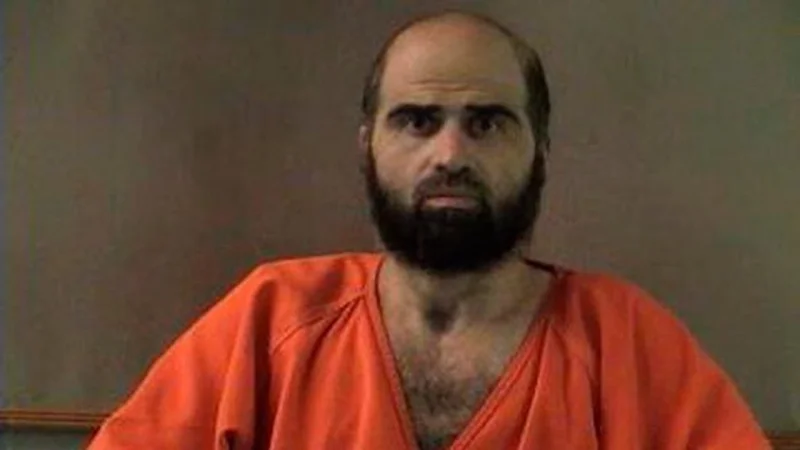
US Secretary of Defense Pete Hegseth has pushed to livestream the December 3 firing-squad execution of Nidal Hasan, a move that has triggered sharp criticism from the UN, lawmakers in both parties and the US Conference of Catholic Bishops. A Pentagon spokesperson said Donald Trump had approved Hegseth’s recommendation, but the administration has not made a final decision on whether the execution will be shown publicly.
The controversy is focused on one man and one date. Hasan, a former Army psychiatrist, was convicted after fatally shooting 13 unarmed US soldiers and wounding 32 others at Fort Hood in 2009, and his execution would be the US Army’s first since World War II and the first death penalty imposed on an armed service member in 65 years. That is why the question of whether anyone will be allowed to watch matters now, not later.
Hegseth has made the case in blunt terms. On Wednesday aboard the USS Abraham Lincoln, he said people should be able to watch because they need to understand there are serious consequences for these kinds of crimes, and he said Hasan was going to get a firing squad of soldiers, as it should be. When asked again, he dismissed the concern with, “Don’t care. We’ll see him on December 3rd.”

The objections have been just as direct. The UN human rights office said livestreaming the execution would be tantamount to a public execution and would breach the absolute prohibition of torture. Thom Tillis said public executions belong to oppressive dictatorships like Iran and Afghanistan. Austin Scott said live-streaming executions is what jihadists do. John Curtis warned against turning executions into bloody spectacles, and Chris Murphy called the proposal disgusting and medieval. The president of the US Conference of Catholic Bishops described it as a barbaric promotion of a culture of death.
That reaction lands against a narrow but important backdrop. Public executions are rare even beyond the US: of the more than 2,700 executions recorded in 17 countries last year, public executions occurred in just two countries, according to the figures cited in the discussion. Amnesty International documented 11 public executions in Iran in 2025 and six in Afghanistan in 2025. The last public US execution was Rainey Bethea’s hanging in 1936.
The friction inside the administration is harder to ignore. On Friday, Trump said Hasan deserved execution by firing squad but did not address the livestream question. Later that evening, he said the administration would decide on the broadcast. JD Vance said, “I don’t know that that’s actually going to happen,” and said he would not watch the execution.
For now, the live broadcast is still an open question, and that makes the coming days decisive. If the administration approves it, the execution would move from a closed military punishment to a public event with no modern US precedent. If it does not, Hegseth’s push will stand as the most aggressive answer yet to a punishment the government already says will be carried out on December 3.