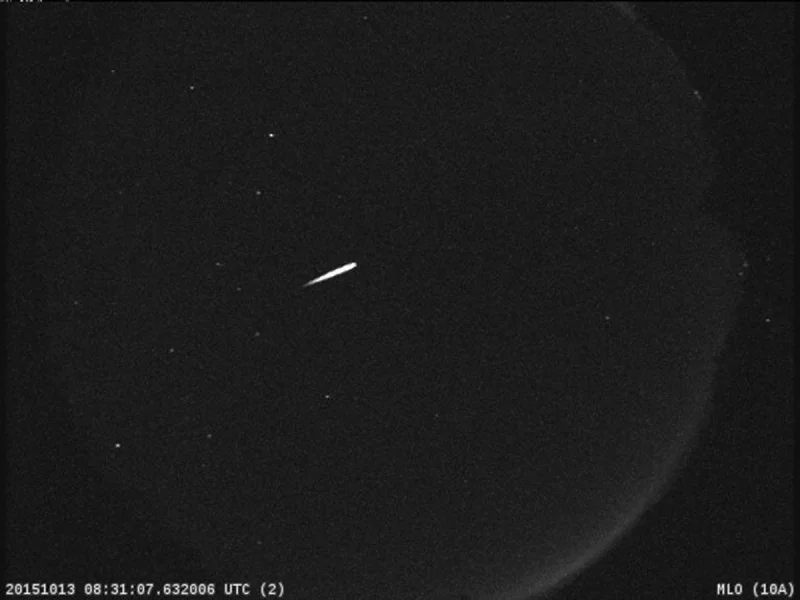
The Draconid meteor shower is expected to peak on the night of October 8, putting one of October’s two active sky shows within reach after sunset. NASA says this year’s display should be modest, with only a few meteors per hour, but the timing makes it easier for casual sky watchers to catch than showers that arrive late at night or before dawn.
That is why the search for meteor shower tonight has a real answer now: the Draconids begin soon after darkness falls, so the best viewing can start without waiting for the small hours. Jackie Flynn Mogensen wrote about the two meteor showers lighting up the month, and the key detail is not just that the Draconids arrive first, but that they offer an early-evening target while the Orionids wait until October 21.

The best chance of seeing either shower comes from a place with limited light pollution, and patience matters almost as much as timing. Giving your eyes about 30 minutes to adjust to the dark can make the difference between spotting a streak and missing it entirely. For the Orionids, NASA says the prime viewing window comes before dawn after the moon sets, a later but stronger contrast with the night sky.
The Draconids are named for Draco and come from Comet 21P/Giacobini-Zinner, while the Orionids are named for Orion and come from Halley’s Comet. Meteor showers happen when Earth crosses trails of debris, dust and ice left behind by comets or asteroids, which is why these displays return on a schedule but never with exactly the same intensity. The Draconids are also the smaller shower, which helps explain why this week’s peak is expected to be brief rather than spectacular.
That does not make the October 8 peak unimportant. It means the value is in the timing: a short window soon after dark, a modest number of meteors and a chance to watch without staying up half the night. After that, the sky shifts to the Orionids on October 21, then to the Southern Taurids on November 4–5 and the Northern Taurids on November 11–12.