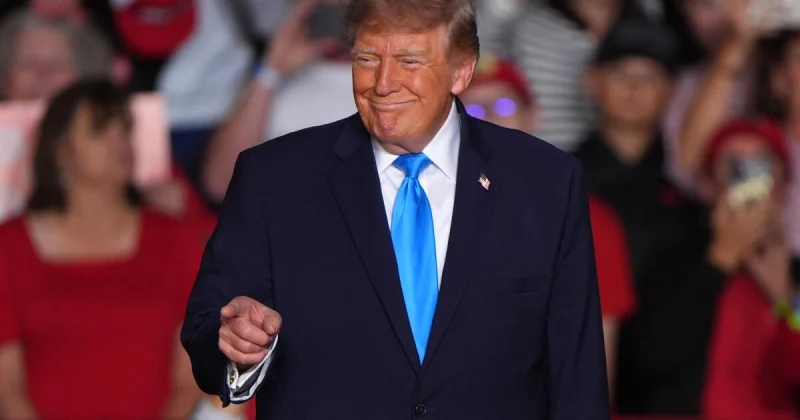
Donald Trump told a Monday rally in Grand Island, Neb., that Iran could “take out” Los Angeles and San Diego, a remark that set off immediate backlash from California leaders and a quick defense from the White House.
Trump said, “They can take out a city, let ’em take out Los Angeles, let ’em take out San Diego,” in a rambling speech that also veered through gas prices, Venezuela and news outlets. The line landed in a state where the comments were read less as political theater than as a threat to two of the country’s largest cities.
Gavin Newsom wrote on X that Trump was saying foreign enemies should “take out” Los Angeles and San Diego and called him “deranged and dangerous.” Newsom said Trump was effectively advocating an attack on more than 10 million U.S. residents, while Todd Gloria posted that San Diego was not collateral damage and was never a “small price to pay.”

That reaction mattered because Trump’s words were not floating in a vacuum. In March, Iran launched missiles toward Diego Garcia, home to a strategic U.K.-U.S. military base, and the reported that Iran had imposed a self-limit of 1,240 miles on its ballistic missile program. Even so, the story said it was unclear whether Trump’s comments were based on any intelligence, and there was no credible intelligence to support a surprise drone attack in California.
Steven Cheung tried to pull the remarks back into the language of deterrence, saying the media reaction was not rooted in reality and that Trump was “clearly stating U.S. cities would have been threatened if a nuclear Iran hadn’t been stopped.” He added that America is safer because of the president and that Iran has no nuclear, no navy, no air force and no money. That explanation left the sharpest part of the episode unresolved: whether Trump was making a literal claim, improvising for effect, or referring to information the public has not seen.
Trump has long had a strained relationship with Los Angeles, and he visited San Diego in 2019 to tout his border wall. But on Monday he did something more direct than trade insults with California. He put two major cities into a sentence about what Iran might be able to do, then left his aides to explain whether he meant it as warning, exaggeration or both. What remains unanswered is not whether the comments caused a political fight — they did — but what intelligence, if any, was behind them.