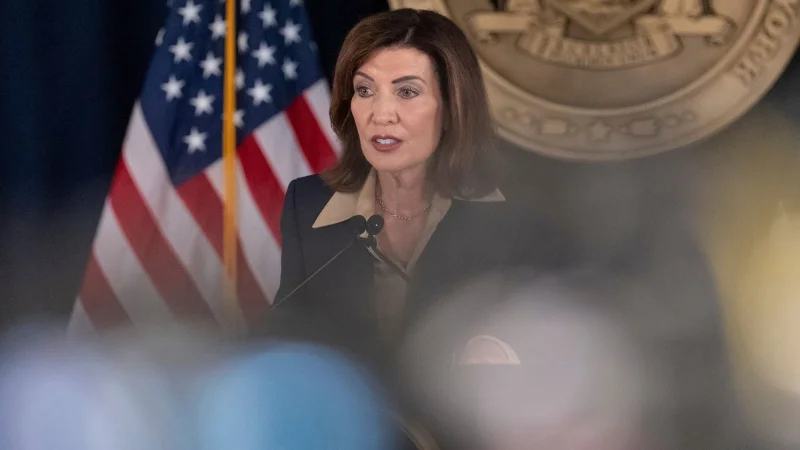
New York state declared a disaster emergency over the measles outbreak on Monday and gave health professionals temporary authority to administer measles-mumps-rubella vaccines. Kathy Hochul said the order will stay in effect through November 4, a response to a disease that is spreading again even after the United States eliminated domestic measles transmission in 2000.
The timing matters because New York had recorded 108 cases this year as of October 3, including seven in New York City and 101 elsewhere in the state. Hochul said it was the first such declaration since cases began to tick up in 2025, and she framed the move bluntly: no one should get seriously ill or die from a vaccine-preventable disease.
The state numbers point to a problem that is no longer confined to one place. Ninety-two of the cases have been recorded since July 15 in a handful of rural communities with insufficient vaccination rates, the kind of coverage gap health experts warn can let measles move quickly. Vaccination below 95 percent is widely treated as too low to stop outbreaks, and New York's response is meant to get more MMR doses into arms before the virus finds more of those gaps.
That response also underlines how far the country has slid from where it was 25 years ago. Measles was declared eliminated in the United States in 2000, yet outbreaks have now been recorded in Texas, Utah, Ohio and South Carolina, while Pennsylvania has already surpassed 1,000 measles cases this year. The last outbreak of more than 1,000 cases stretched over several years in New York City in the early 1990s, a reminder that the disease can still regain ground when vaccination weakens.
For New York, the unresolved question is not whether the state can name the problem. It is whether the emergency period will be enough to slow spread in the rural communities driving most of the caseload before November arrives, when the Pan American Health Organization is set to decide whether the United States and Mexico keep their measles-free status.
PAHO has already said high and even vaccination coverage, stronger surveillance and quick outbreak response are essential to stop transmission and preserve elimination in the Americas. New York's emergency order is an effort to put that advice into practice before the outbreak grows into something harder to contain.