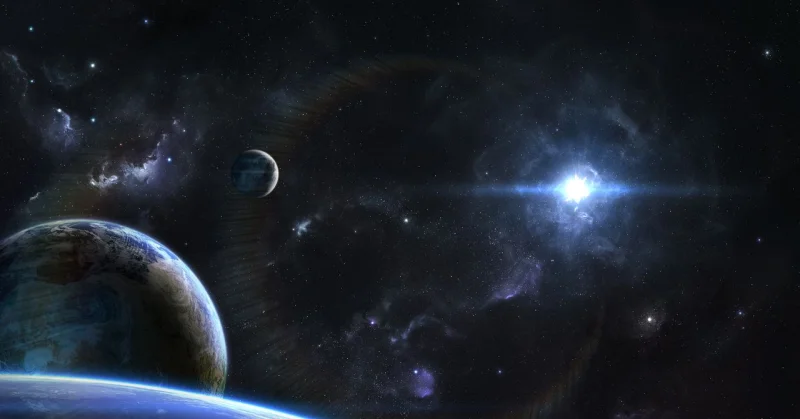
Astronomers have confirmed Elias 2-24b as the youngest known exoplanet ever, turning a faint bright spot in a disk around Elias 2-24 into a record-setting planet. The object sits about 450 light-years from Earth and was pinned down after researchers compared what they saw in 2018 and 2020.
The work was led by Andrea Bernardi at Diego Portales University in Chile, who focused on seven protoplanetary disks marked by notable gaps. One of them had been known for nearly a decade, and the European Southern Observatory's Very Large Telescope had already found a point of light inside that gap. Bernardi's team then used data from the W.M. Keck Observatory in Hawaii to check whether the spot moved with the star instead of drifting on its own.
That comparison mattered because the brightest clue was not enough by itself. When the later data lined up with the earlier observations, the researchers concluded the object was gravitationally bound to Elias 2-24, not a background source. The result is Elias 2-24b, a planet orbiting its star at about 55 astronomical units and likely weighing no more than 1.9 to 4.0 times Jupiter's mass.

Its age is what sets it apart. The host star is less than 1 million years old, which makes Elias 2-24b younger than the previously youngest directly observed exoplanets around PDS 70 and WISPIT 2, both over 5 million years old. That is a sharp break from the usual picture: NASA says the core accretion model should take about 5 million years for a Jupiter-sized planet to form.
That gap between theory and observation is the story's friction point. If Elias 2-24b is already in place inside its disk before the standard timeline has really run, then astronomers are seeing a giant planet at a stage that is usually hidden from view. Most of the roughly 6,000 confirmed exoplanets are billions of years old, and young ones are hard to catch because they are buried in gas and dust while they grow.
The next step is not mystery but measurement. Elias 2-24b gives astronomers a rare chance to test how planets assemble inside a disk while the process is still underway, and whether a gap really does trace a growing world. For now, the record is clear: the youngest confirmed exoplanet known is still forming, and it is forming in plain sight.