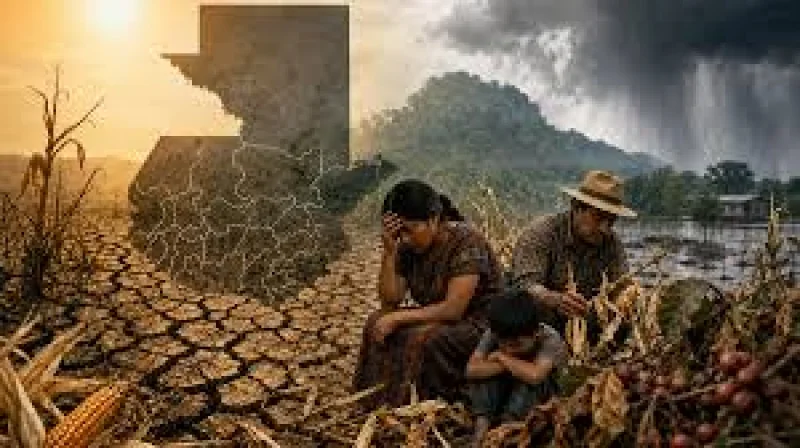
Guatemala had 226,773.97 hectares affected by agricultural drought as of August 27, 2026, a level that already exceeds the worst damage recorded in the last decade. Rafael López said the estimate could still rise as extension workers keep recording new losses in communities, and the country’s crop damage now reaches 486,727 families in 194 municipalities.
The scale matters because the losses are not spread evenly. Maize carries the heaviest blow at 221,772 hectares, equal to 22.5% of the national area planted with the crop, while frijol accounts for 11,895.10 hectares and coffee for 8,628.64 hectares. Other crops add another 1,311.56 hectares, a reminder that the drought has moved beyond a single harvest and into the backbone of rural income and food supply.
That is why the number is being watched now. The Ministry of Agriculture said 96.76% of the agricultural damage counted nationwide corresponds to lack of rain, and the losses have already shown up in the eastern, central and western regions. In March, the ministry received an alert from INSIVUMEH and the Coordinadora Nacional para la Reducción de Desastres about the rainfall deficit expected for 2026, then May, the usual planting month, brought almost no rain. June offered only partial relief through a tropical system, and convective rains scattered the water unevenly.

The result is a country dealing with opposite extremes at the same time. Some areas are under agricultural drought while others, including Izabal and Alta Verapaz, are facing flooding from intense and concentrated rainfall. That contrast can destroy crops, agricultural infrastructure and irrigation systems, and it makes harvesting, field work and livestock management harder just as excessive humidity starts to hurt feeding and health.
For López, the situation is exceptional for the agricultural sector, and the history backs that up. The previous worst drought-related agricultural damage in the last 10 years came in 2018, when 186,297 hectares were hit after the eruption of the Volcán de Fuego and a prolonged canícula. The new figure is 40,476.97 hectares higher than that record, or about 21.7% above it. In 2019, the country reported 129,000 hectares affected, then 76,000 in 2025, 72,000 in 2024 and 54,000 in 2023.
The dry stretch itself has been severe. The canícula lasted about 60 days without significant rain for the agricultural sector, alongside late rainfall onset, high temperatures, water deficit and the risk of an early end to the rainy season. The Ministry of Agriculture expects new climate projections between November 2026 and February 2027 to define the outlook, but López warned the estimate may keep climbing as more field damage is recorded. For now, Guatemala is already living with a drought that has gone past its recent record and is still not finished being counted.