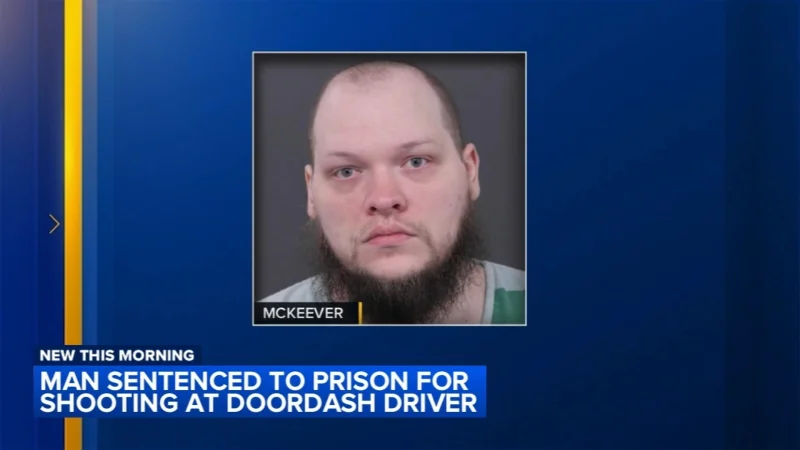
Keilan McKeever was sentenced on Tuesday to four to 10 years in state prison for firing a 9mm bullet at DoorDash driver Khalik Lewis during a March 2025 delivery dispute over cheesesteaks. A judge said he had been prepared to send McKeever away for even longer, calling the case disgusting.
The sentence brings a close, at least for now, to a case built around a short drive that turned violent. Lewis was making a delivery when the bullet struck the back windshield of his Honda Civic and shattered it, then ended up stuck in the hood of his sweatshirt. He later said he gave up driving for DoorDash after the shooting, and that loud noises still trigger him and make sleep difficult. “Literally, my life was just inches away from ending,” he said.

McKeever had pleaded guilty earlier this year to aggravated assault and related crimes after prosecutors dropped an attempted murder charge in exchange for the plea. Pennsylvania State Police troopers wrote in court filings that he initially denied shooting anyone and blamed the sound on a car backfiring. A neighbor’s security camera showed Lewis pulling up to McKeever’s home on Cherry Street, then McKeever shouting and threatening him almost immediately.
Lewis said he tried to explain that the order was not late, but McKeever would not listen. He said McKeever came out of the house holding a loaded handgun and shouted, “I’ll shoot you right now” and “see this” before the gunfire. Judge Steven Corr said the case was so serious he had considered a longer prison term, and he told McKeever, “We have a young man out trying to make money, providing a service to you,” before adding that he did not know what could make someone fire on another person like that.
Lewis said the shooting changed the way he works and sleeps, and he described the sentence as lighter than he hoped for. The reason McKeever thought the cheesesteaks were late was not explained in court filings, but the dispute was enough to turn a delivery app order into a prison case. With the plea already entered and sentence imposed, the remaining question is whether the record ends there or whether anything else in the case still moves forward.