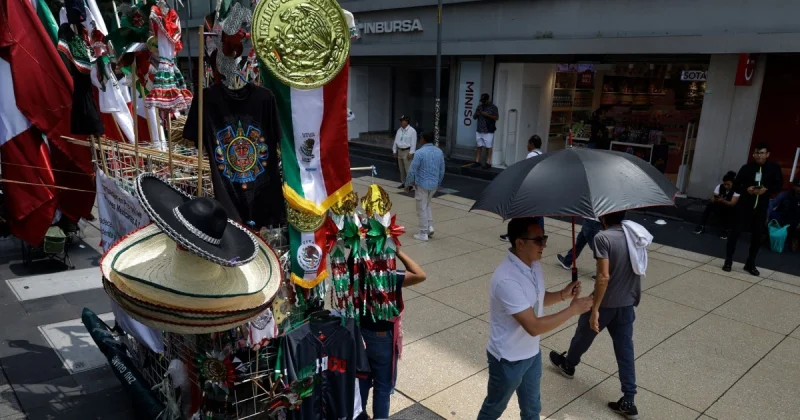
Mexico was getting ready to live one of its most emotional nights, and the changes were already visible in the Zócalo. The square in the heart of Mexico City was set to fill with families, children and thousands of people for the Grito de la Independencia, with Palacio Nacional behind the reporter and the main balcony waiting for the arenga.
Elián Zidán said the gathering would celebrate 216 years of independence and that the plaza would soon be packed with Mexican men and women. More than 250,000 people were expected to arrive, with Intocable scheduled to perform and fireworks planned to light up Mexico City afterward. The live coverage was scheduled for 11:35 in central time through Univision, Galavisión and ViX.

What makes this Grito different is not the ritual itself, but the language inside it. The arenga was said to begin with “mexicanos y mexicanas,” and the ceremony would add heroes and heroines of the homeland, including an illuminated image of Josefa Ortiz de Domínguez. Last year, President Claudia Sheinbaum used the name Josefa Ortiz Téllez Girón, and she has said women do not belong to anyone, a choice that turns a familiar national script toward a more explicit place for women in it.
The setting carries its own weight. The cathedral mentioned in the report took more than 200 years to build, passed through more than 20 architects and began to sink because it was built on wooden pilings, a reminder that this part of the city was once a lake. That history sits under the celebration like a second foundation, which is why the night feels both ceremonial and political: the country is not only repeating a tradition, but revising the words that define who it is speaking to. The only question left is how Claudia Sheinbaum will sound when she pronounces the arenga from Palacio Nacional.