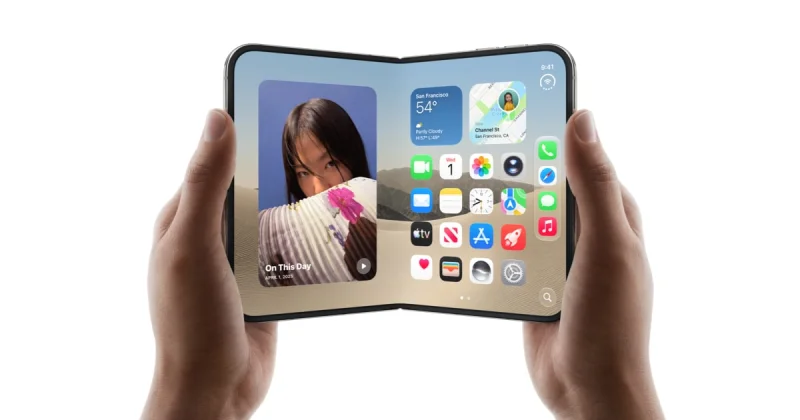
Apple unveiled the iPhone Duo on Sept. 9, setting the stage for its first foldable phone to reach buyers with preorders opening Oct. 16 and availability beginning Oct. 23. The new device starts at $1,999 and folds from a 5.4-inch outer display into a 7.6-inch OLED panel.
That pricing lands the Duo in direct comparison with a setup many people already carry: an iPhone 18 Pro and a 128GB Wi-Fi iPad mini. That pair costs $1,798, which makes the foldable $201 more expensive even before a buyer weighs storage, accessories or the value of having two separate screens. Apple is betting that some users will pay for the chance to collapse phone and tablet duty into one device.
The pitch is straightforward. The Duo brings Split View multitasking, so it can run two apps side by side, open two windows of the same app and save app pairs for later. It also includes ProMotion, Always-On functionality, up to 3,000 nits of outdoor brightness and Apple’s A20 Pro chip. For people whose tablet use mostly means browsing, messaging, video calls and light multitasking, that is enough to raise a real question about whether a second device is still necessary.
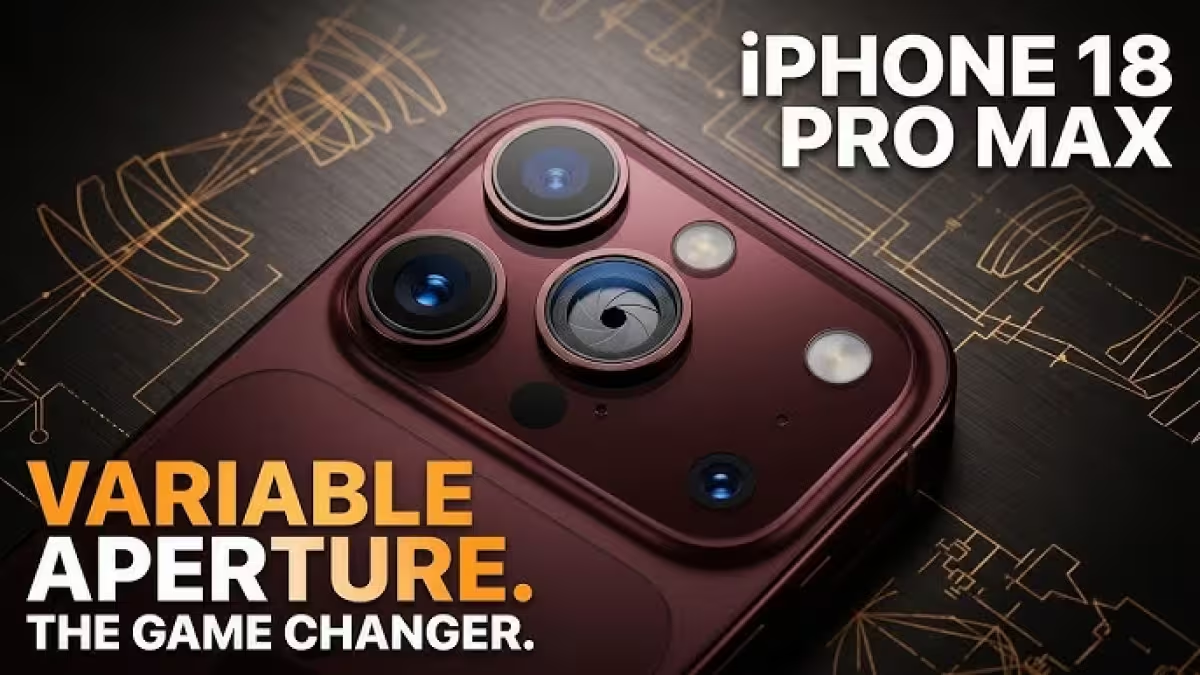
But the iPad mini keeps the edge where the Duo is still thinner. Apple lists the iPad mini with an 8.3-inch display and support for Apple Pencil Pro and Apple Pencil (USB-C), while the Duo’s Apple Pencil support will arrive after launch and will be limited to Apple Pencil (USB-C). The Duo is also eSIM-only, which narrows the appeal for anyone who still wants the flexibility of a physical SIM. That leaves business users with one more thing to check before treating the foldable as a true replacement: whether the apps they rely on are built for the split-screen format or just tolerate it.
Some already are. Netflix, Zoom and Slack use the folding interface, which gives the Duo an early advantage for work and calls that can benefit from side-by-side viewing. But support for a few popular apps does not settle the larger workflow question. For anyone deciding between one foldable device and a phone-plus-tablet combination, the difference now comes down to structure, not novelty: the Duo can replace both for some people, but it does so at a higher price and with fewer stylus options than the smaller tablet it is trying to absorb.
Preorders open Oct. 16, and that is when the trade-off becomes real. Buyers will not just be choosing a new iPhone; they will be deciding whether one screen that folds is enough to retire a second device they may still need for Pencil input, larger reading space or apps that do not yet fit the new shape well.