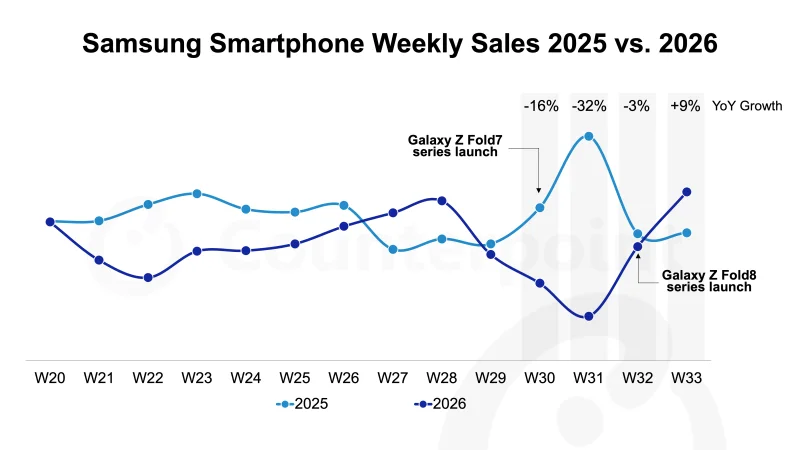
Samsung’s Galaxy Z8 series opened with a stronger first two weeks than its predecessor, and the signal came fast. The lineup, launched on August 7, 2026, sold 8% more units from August 7 to August 15 than the Galaxy Z7 series did in the same early window, with the Galaxy Z Fold8 doing most of the work.
That matters now because Samsung is trying to hold its foldable lead just as Apple is expected to step into the same premium market next month. Counterpoint Research said the Z Fold8 accounted for roughly 57% of Z8 series sales in those first two weeks, a share that points to a clear split inside the lineup: the larger book-style model carried the launch, while the rest of the family provided the volume behind it.
The early read is especially useful because the launch window is the cleanest test of demand. Counterpoint Research’s Sujeong Lim said the Z Fold8 had a clear and compelling value proposition, which helps explain why it absorbed so much of the opening sales. The same data also suggests Samsung’s foldables are still pulling premium buyers even after a bruising first half of 2026, when memory prices pushed up smartphone costs and many consumers delayed replacement decisions.
There is still a catch. Counterpoint Research said some retailers were already out of stock, so the 8% increase does not reflect a perfectly smooth supply run. That means Samsung’s early strength may have been even harder to translate into shipments than the numbers show, but it also means demand was strong enough to run ahead of supply. Lim said sales of the Z8 are expected to stay relatively stable as stock normalizes, which takes some of the drama out of the launch and shifts the focus to whether Samsung can keep momentum once shelves fill.
Apple changes the frame. Counterpoint Research said the expected foldable iPhone appears to use a similar display size and aspect ratio to the Z Fold 8, putting the two products in the same stretch of the premium market rather than in separate corners of it. Liz Lee said the key question is whether Samsung can keep its existing foldable base and continue converting premium Galaxy users while Apple leans on its large iPhone Pro and Pro Max audience and tries to lure some Android foldable buyers too.
For Samsung, the first two weeks of Z8 sales look like proof that the company still owns the foldable category it built. The harder test comes next month, when Apple is expected to bring its first foldable iPhone into a market where Samsung has a head start, but not a quiet one.