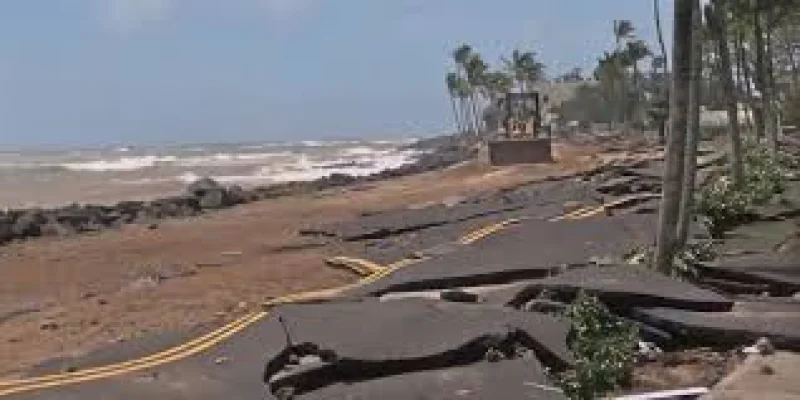
Hurricane Lowell swept near Ni‘ihau on Tuesday night as a Category 2 storm with winds of up to 110 mph, leaving Ni‘ihau, Kauaʻi and O‘ahu with widespread power outages. The damage landed across Hawaii's western islands in a matter of hours, turning a passing storm into a regional recovery problem.
That is why Hawaii is being searched now. Residents and utility customers across the islands are dealing with the same question: how long will the lights stay off after the storm's strongest winds moved through. A separate look at the storm's track shows its center passed about 50 miles from Ni‘ihau in Kauai county, close enough to drive outages across several islands at once.

The storm's reach matters because Lowell was not an isolated burst of weather. Five named storms have already occurred in the central Pacific this year, and the National Weather Service has pointed to a strong El Niño as a key driver of the above-normal hurricane season. For readers following the system, the storm was part of a broader pattern already covered in earlier updates on Hawaii and Kauai county, including the warning signs that Lowell was strengthening before land impact.
One detail stood out even more than the outages: a tornado watch was issued for Kauaʻi on Monday night and into Tuesday morning, and research maps from Iowa State University suggest it was likely the first tornado watch in Hawaii's history. Yet no tornado was documented. That gap matters because it shows how unusual the storm environment became without producing the one event the warning system was built to flag.
What remains unresolved is the scale of the damage on each island and the pace of restoration. The facts point to the same conclusion: Lowell hit Hawaii's western islands hard enough to stress power systems across multiple communities, and the next phase will be measured less by wind speed than by how quickly service returns.