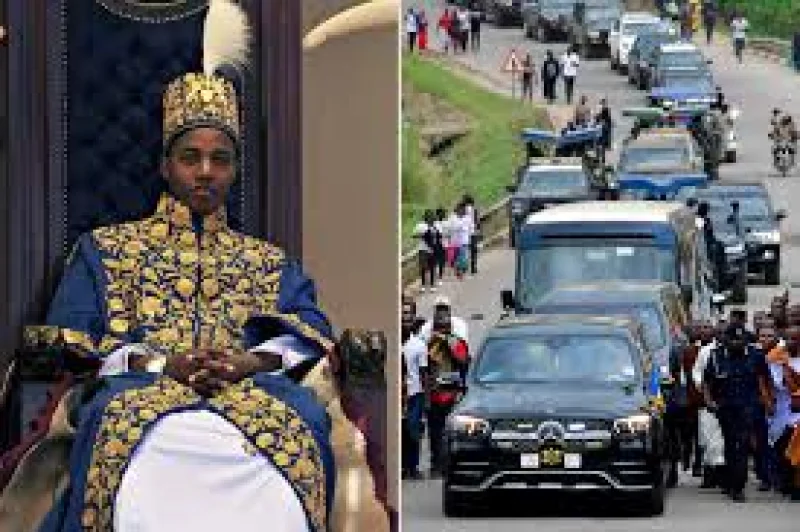
The succession fight over Rukidi IV of Toro has widened into a direct challenge to the royal clan’s choice of a crown prince. On Wednesday, the clan’s succession committee said it had chosen Prince Edward Rukidi Kijanangoma, but the family pushed back and said King Oyo Nyimba Kabamba Iguru Rukidi IV’s will names a son as heir if that son is lawfully recognized.
The dispute matters now because Oyo died on 27 August in the US while receiving cancer treatment, and the succession clock started ticking immediately. He had ruled from the age of three, when he became the world’s youngest reigning monarch in 1995, so the question of who follows him is not ceremonial theatre. It is the core test of whether Tooro will treat the committee’s selection as final or give weight to the written wishes of the dead king.
Princess Ruth Nsemere Komuntale said at a press conference later on Wednesday that, according to her brother’s will, “a son whose existence had not been publicly known until his death should succeed him.” A section of the document backs that claim in plain terms: “I hereby declare and direct that if, at the date of my death, I am survived by a son lawfully recognised as my biological son, I appoint him as my heir to the throne of the kingdom of Tooro.”

That is where the dispute becomes more than a family disagreement. The kingdom’s succession system is meant to run through a committee appointed by the royal clan, and a committee member told NTV that a royal child must be officially introduced to elders before being considered for leadership. But the family’s reading of the will suggests that bloodline alone is not enough; the son must also be lawfully recognised. The open question is whether that recognition ever happened under Tooro custom, because no one has publicly identified the boy or shown how he was formally received.
Queen Mother Best Kemigisa Akiiki sharpened the clash on Thursday, denouncing what she called a “self-appointed group of clan members” and saying the royal family had been put under house arrest. She said troops had “removed the royal guards without notice, and... were deployed around the palace,” adding, “We cannot leave or receive people freely.” That account undercuts any image of a calm transition and suggests the succession contest is already being managed as a security issue as much as a customary one.
There is also a second strand inside the dispute. Calvin Armstrong Rwomiire Akiiki, the kingdom’s prime minister, revealed the existence of a son on 27 August in a social media post announcing Oyo’s death, saying, “His majesty leaves behind a prince as his heir, whose identity will be formally revealed at the appropriate time, in accordance with the traditions and customs of Tooro kingdom.” He later called for restraint and said, “There will be time to examine the will, to hear those advancing a different position, and to consider our customs, the applicable law and the proper institutions through which succession should be determined.”
That leaves the committee’s choice, the family’s will-based claim and the customs argument all moving at once. Prince George Desmond-Kamurasi was another contender, though the committee said he declined because of other responsibilities. Andrew Mwenda added another complication on Thursday in a post on X, saying the family had not produced a photo of the purported son and writing that, in Tooro, a king’s son could succeed only if he was born to a queen officially married to the king. The next step is not a quick proclamation but a test of which rule Tooro treats as controlling: the committee’s selection, the custom of recognized queens, or the king’s written direction.