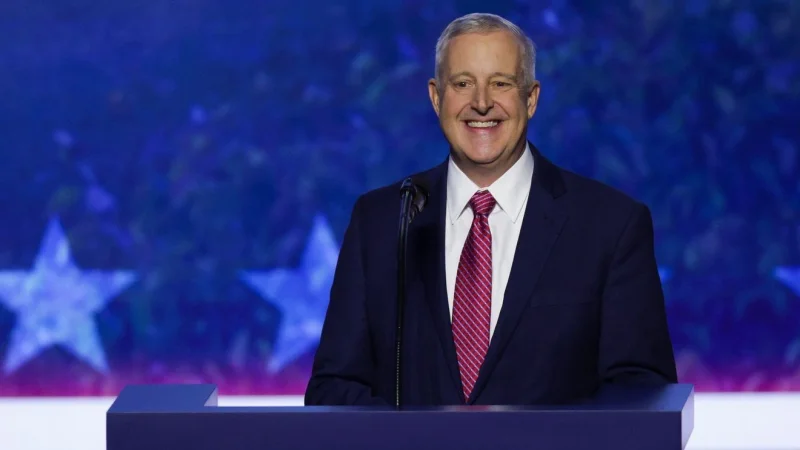
Michael Whatley is pressing a sharper crime-and-border message as he tries to narrow his polling gap with Roy Cooper in North Carolina’s open U.S. Senate race. The Republican nominee says the contest will turn on a direct contrast between the two men, and he is betting that message can carry him closer to the former governor with about eight weeks left before Election Day.
Whatley, who visited all 100 counties in North Carolina, is pitching himself as a Trump-backed conservative focused on crime, border security and tax cuts. He says he is fighting for the people of North Carolina, for every family and every community, and for people to make more and keep more while feeling safe where they live. Public polling has consistently shown him trailing Cooper by high single digits or more, a gap that explains why he is driving a hard statewide message now.

That pitch is built around a blunt contrast. Whatley says Cooper will fight for criminals, illegal aliens and men who want to play in women’s sports and go in girls’ bathrooms. He also says Cooper left 4,200 hardened criminals out of prison, including rapists and murderers, and that 2,200 of those people were rearrested. Whatley says more than 600 of those rearrests were for felony assault, aggravated assault and assault with a deadly weapon.
The numbers are powerful, but they are also incomplete on their own. Whatley did not spell out how the 4,200 releases compare with the full prison population or how the 2,200 rearrests compare with the broader pool of people who left prison. Without that frame, the figures make for a forceful campaign line but not a full measure of the policy difference he is trying to draw. On substance, the split between the two candidates is clearer in message than in detailed governing plans: Whatley is running on crime, border security and taxes, while Cooper’s appeal has long rested in part on crossover support from independents and some Republicans.
That is the race Whatley is trying to solve. He helped lead Republican victories for the White House, Senate and House in 2024 and now faces a statewide electorate that still does not know him as well as it knows Cooper. His answer is to keep taking the campaign directly to voters across North Carolina and to frame the seat as a choice between a Trump-backed conservative and a former Democratic governor with deep statewide recognition. If Whatley can close the gap, the fight over North Carolina’s open seat could tighten fast; if he cannot, the contrast he is trying to define may end up defining him instead.