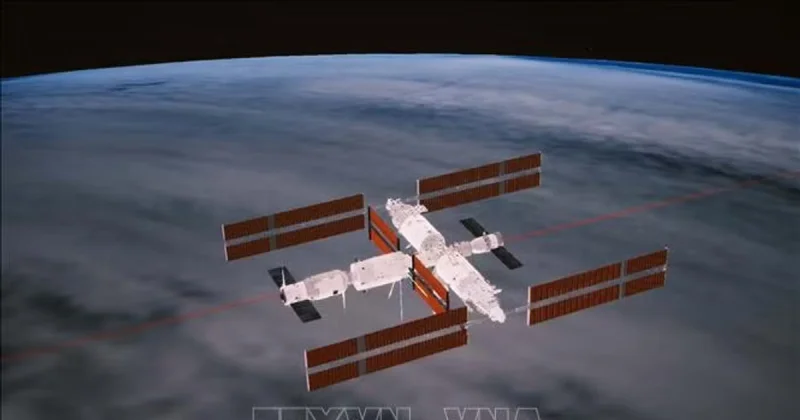
The Defense Intelligence Agency says China could deploy space-based directed-energy weapons by the end of the 2020s, a warning that pushes the country's anti-satellite threat beyond the ground and into orbit. In the unclassified report, the agency said those systems could threaten satellites with disruptive force from space itself.
That matters now because the report puts a date on a capability that is still being assessed from open sources: July was the data cutoff, and the assessment was published as the U.S. military is speaking more openly about the weaponry that can reach into orbit. The report is titled Desafíos para la seguridad espacial, and it treats space as a contested domain rather than a safe one.
The DIA says China already has terrestrial directed-energy weapons that can disrupt, degrade, or damage satellites, and it adds that the Ejército Popular de Liberación sees those systems as useful countermeasures because they can inflict both reversible and irreversible harm. The report goes a step farther, saying China could field both space-based directed-energy systems and higher-power ground-based systems by the end of the 2020s. But it does not say whether those systems would be lasers, high-power microwaves, particle beams, or some mix of the three.

That gap matters because the most vulnerable satellites would not be all satellites equally. Directed-energy weapons are most dangerous to spacecraft in line of sight, especially satellites operating in low Earth orbit or in passes that keep them exposed to a beam long enough to heat sensors, blind optics, or overwhelm electronics. A ground system needs clear visibility to reach a target; a space-based system shortens the distance and can follow the target across more of its orbit, which is why the report treats orbital deployment as a step change rather than a simple upgrade.
The same assessment also says Chinese government-affiliated researchers have been studying space-deployed kinetic weapons since at least 2006, including reentry, payload separation, launch vehicles, and target selection in transit orbits. Much of the Ejército Popular de Liberación doctrine described in the report casts those systems as deterrents meant to prevent outside intervention in a regional conflict or to control escalation. That is the friction inside the warning: the known directed-energy threat is already terrestrial, but the agency is looking ahead to a space-based version that could be harder to predict and harder to counter.
Stephen Whiting said in August 2026 that China possessed antisatellite missiles, ground-based lasers, jamming equipment, and maneuverable multipurpose satellites, a public warning that now sits alongside the DIA's broader assessment. China had not responded to the report at the time, and the agency's own message is that the next test will be whether those projected systems move from study and doctrine into orbit before the decade ends. If they do, the contest over satellites will no longer be about whether space can be targeted, but from where.