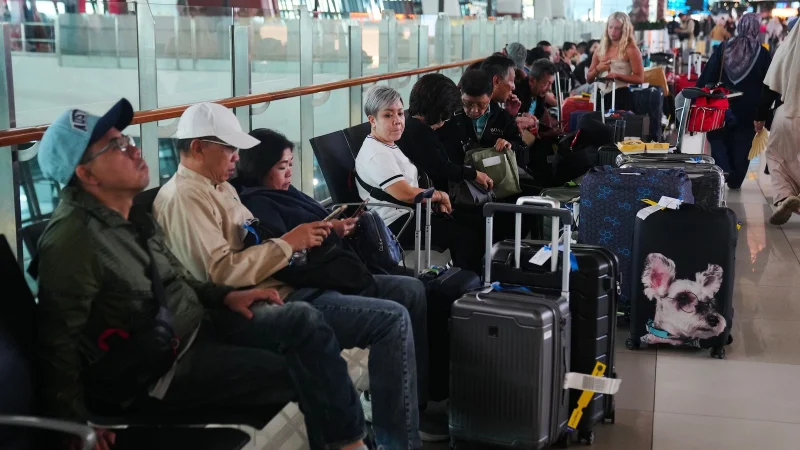
Anak Krakatau erupted at 3:53 a.m. Sunday for 30 seconds, and Jakarta’s Soekarno-Hatta International Airport canceled all flights as ash spread over western Indonesia. AirNav Indonesia also closed airspace around Soekarno-Hatta and Halim Perdanakusuma in the capital, while several other airports were hit by volcanic ash.
By mid-afternoon, the closure had affected 516 flight movements and about 22,800 passengers at Soekarno-Hatta alone, with Radin Inten II Airport in Lampung among the airports shut. Services were also disrupted at Bali’s I Gusti Ngurah Rai International Airport and in Medan, showing how quickly a short eruption can ripple through the country’s busiest air routes.

Lukman F. Laisa said safety remained the top priority in every operational decision, but that caution comes with a practical cost for airlines and travelers. He warned that flight schedules could face cascading disruptions affecting aircraft rotations, fleet availability and terminal capacity, a problem made sharper because the airport was ordered closed until at least 5:30 p.m. Sunday.
The ash plume gave authorities a reason to move fast. One cloud rose to 20,000 feet and drifted northeast over Jakarta, Banten, West Java and nearby waters, while a second reached 50,000 feet and spread across parts of Banten, Lampung and Bengkulu, the southern Sunda Strait and waters west of Sumatra. No casualties were reported and no evacuation order was issued, even as officials told residents and visitors to stay at least 3 kilometers from the active crater.
Lana Saria said activity at Anak Krakatau has intensified since July and that Sunday’s eruption was the strongest during the current period of unrest. She added that officials cannot predict whether a larger eruption will occur. That leaves airlines, airport operators and travelers waiting on the next monitoring update, with the question not whether disruption happened, but how long the system can keep absorbing it before schedules settle again.