The Department of Justice has sent seven subpoenas to the Nevada Secretary of State’s Office over voter-related information in the past three months, a fresh federal push that lands after a court rejected the same effort to force over sensitive registration data. The subpoenas were sent on behalf of the FBI, and Nevada confirmed them this week.
The timing is why the subpoenas are drawing attention now. In Nevada, the government is still pressing for voter information even though last month a federal court dismissed its lawsuit for the state’s full unredacted voter registration list, which would have included names, addresses, birthdates, driver’s license information and partial Social Security numbers. That loss was the Justice Department’s 22nd straight district court defeat in its effort to obtain voter lists from all states, and it came before the department appealed to the 9th Circuit Court of Appeals.
The Nevada Secretary of State’s Office confirmed the subpoenas to Democracy Docket on Friday, a day after The Nevada Independent first reported them. The requests are part of a broader federal campaign to press Nevada for voter data, one that has already run into repeated legal trouble and has left the department with a 0-23 record in its voter roll effort. It has also lost an appeal to the full U.S. Court of Appeals for the 6th Circuit.

The subpoenas also deepen a fight that has been building for months around how far federal officials can go in demanding election records. In July, Markwayne Mullin publicly alleged that an analysis of Nevada’s public voter file showed as many as 15,903 non-citizens registered in the state. Later, DHS walked back that figure in private meetings with state officials, saying only 185 potential noncitizens had been identified and that the larger number was merely an upper limit. The mismatch left state officials facing a claim that was later softened by the same federal side advancing it.
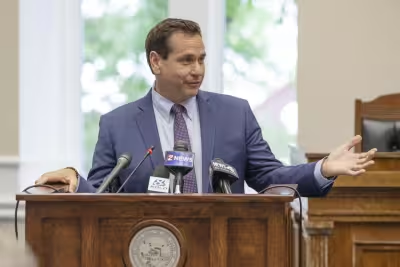
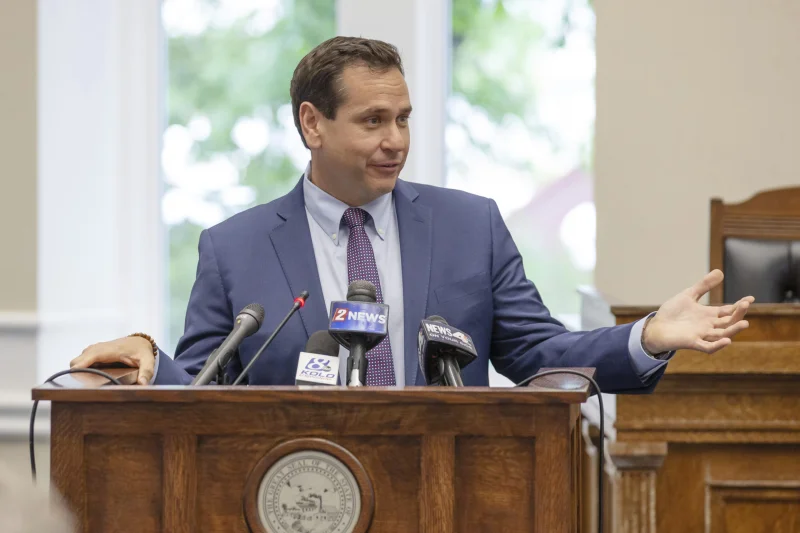
Francisco Aguilar has been one of the clearest public voices in that dispute. In August, he said he was “not scared of these f***ers” when asked about threats from Trump officials, and he later warned that “The fact that they are so flippant about a fundamental constitutional right is unsettling.” He also said, “If they are going to accuse individuals in a certain state that they do not understand of being a noncitizen, when they are potentially a citizen — that is dangerous.”
What remains unknown is the most basic part of the subpoenas themselves: the specific voter-related information they seek. But the direction of travel is plain. The Justice Department is still trying to pry loose Nevada voter data through subpoenas even after a federal court said it could not demand that sensitive information under the Civil Rights Act of 1960, and the next test now sits with the 9th Circuit.