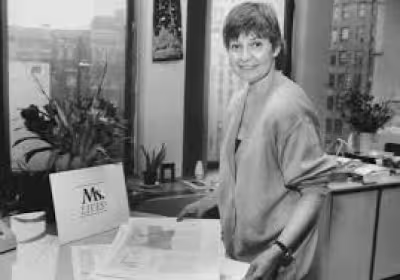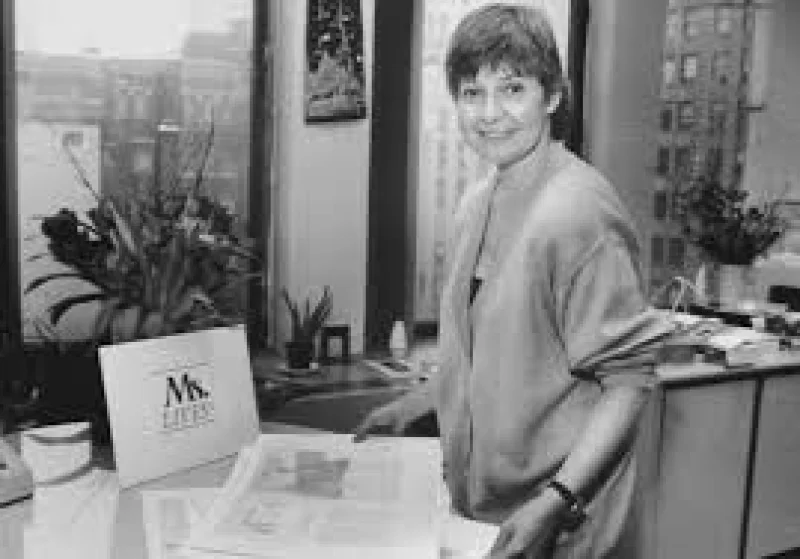
Robin Morgan, a central figure in second-wave feminism and a co-founder of the Women’s Media Center, has died at 85. The organization confirmed her death on Saturday.
For readers searching her name now, the news lands with the weight of an era closing. Morgan was not just a prominent writer on women’s rights; Julie Burton called her one of the architects of the contemporary women’s movement, a judgment that fits the scale of her influence across organizing, publishing and the language of feminism itself.
Morgan helped shape some of the movement’s most recognizable flashpoints. She was among the organizers of the first protest against the Miss America pageant in 1968, edited the 1970 anthology Sisterhood Is Powerful and wrote Goodbye to All That the same year. She is widely credited with coining herstory and with popularizing the clenched fist and female symbol used by the liberation movement. Her poem Monster was quoted at feminist rallies and beyond, and Arraignment helped capture the movement’s embrace of Sylvia Plath and condemnation of Ted Hughes.
Her public reputation also carried the contradictions that often surrounded women who pushed hardest against the limits of their time. In one government report, Morgan was labeled an anarchist housewife even as she was described as one of the architects of the contemporary women’s movement. She and others blamed Ted Hughes for Sylvia Plath’s suicide in 1963, a charge that became part of the movement’s public language and its moral argument.
That history made Morgan more than a symbol. She was a working writer whose life moved through activism, performance and private complexity, from more than 20 books to a marriage of more than 20 years to Kenneth Pitchford, with whom she had her son Blake Morgan. She described that marriage as a two-member commune, and in Saturday’s Child she said she kept a threadbare, somewhat surreal sense of humor.
Even her most memorable lines carried the bite of a movement learning to speak for itself: Put that in your apple pie and smoke it, I want a women’s revolution like a lover/I lust for it, and I accuse/Ted Hughes. The unanswered question now is not whether Morgan mattered. It is how much of the modern feminist vocabulary, image and defiance still bears her imprint, even after her death.