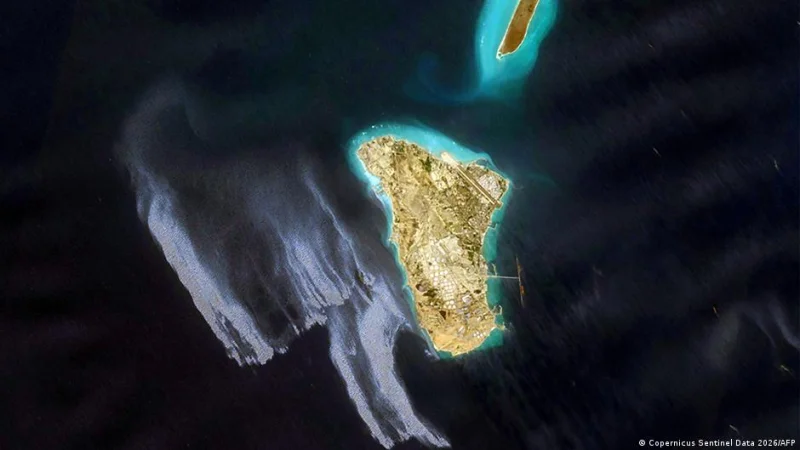
The US military said Saturday, September 5, that it struck and destroyed three oil tankers it said were linked to Iran's Revolutionary Guards, knocking out vessels off the coast of Kharg Island, near Jask and in the Gulf of Oman. CENTCOM said the ships were not just hit but permanently disabled, with one tanker destroyed after its crew was told to abandon ship.
That answer is why the strikes matter now. Readers are looking at the tanker attacks because they fold into the wider Iran war, where each hit on shipping carries an economic and military cost. CENTCOM said the crude oil carriers M/T Downy and M/T Stark 1 were permanently disabled, while the unladen M/T Kylo was struck in multiple critical locations and rendered inoperable after the crew was directed to leave.

Iranian media reported that a tanker was targeted near Kharg Island, adding a second account of the same maritime pressure point. The US military did not spell out what specific attacks triggered its response, but its statement tied the strikes to failed Iranian attacks and framed the operation as an answer to threats against crude oil transport linked to the IRGC. That left the most important question of the day hanging in plain view: whether this was a single reprisal or the start of a broader campaign against Iranian shipping.
The confrontation at sea was not the only place where the rhetoric turned hard. In a separate thread on Gaza, Mike Huckabee said there was no plan to force people out against their will, even as Israel Katz said the Israeli government was ready to remove Palestinians from Gaza and was waiting for discussions with the United States about where they should go. Itamar Ben-Gvir has also pushed a proposal to see 250,000 Palestinians leave Gaza in the first year of his plan, underlining how far apart the public positions remain.
For now, the tanker strikes do one thing clearly: they raise the cost of moving Iranian crude and show that the fight around Iran is no longer confined to speeches or sanctions. If the next move is retaliation, diplomacy or another strike, the first clue will come from whether shipping in the Gulf of Oman and around Kharg Island stays exposed.