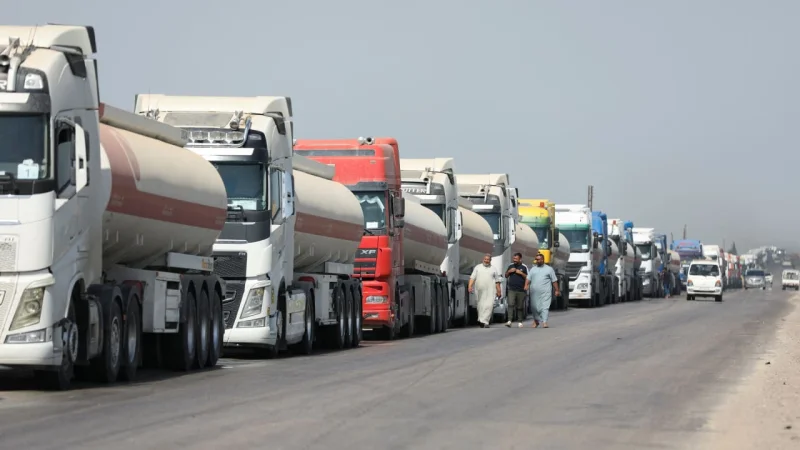
Donald Trump said new pipelines and overland transportation routes across the Middle East could cut the world’s reliance on the Strait of Hormuz, putting a fresh spotlight on one of the region’s most important oil chokepoints. The remark landed as the White House said he remains committed to bringing down energy costs after diesel prices hit $5.85 a gallon in the U.S.
The appeal of alternatives is simple: every barrel that moves outside the Strait of Hormuz is one less exposed to disruption. But the strait still sits at the center of regional security and the global economy, which is why Trump’s argument is drawing attention now rather than later. Oil traders, shippers and governments alike know that the chokepoint remains hard to replace in practice, even when leaders talk about bypassing it.
The pressure on Iran is tightening at the same time. The State Department said the Trump administration’s latest sanctions targeting Turkey-based Golden Global Bank are meant to further isolate Iran from the international financial system, and the Treasury Department launched Operation Economic Outcast against Iran last week. Treasury Secretary Scott Bessent said the campaign is designed to “tighten the noose and block every potential source of revenue that funds the Islamic Revolutionary Guard Corps and the Iranian regime.”

That squeeze is not just theoretical. A senior Iranian source told that Iran has only about two months’ worth of gasoline left and must import fuel because of limited refining capacity. Three Iranian sources said the sanctions and other moves have left Iran with few remaining channels to obtain currency and goods. If those channels keep narrowing, the IRGC loses more than cash on paper; it loses the revenue streams that help sustain the wider system around it.
At the same time, Badr Abdelatty called on the U.S. and Iran to return to negotiations Saturday to de-escalate tensions in the Middle East. Egypt’s foreign ministry said the issue came up in a phone call between Abdelatty and his Omani counterpart, and that the conversation touched on developments in the Strait of Hormuz and their implications for regional security and the global economy. The message was plain: diplomacy is being pushed forward even as the economic pressure rises.
What remains unresolved is the part Trump has not yet filled in. He has pointed to pipelines and overland transportation routes across the Middle East, but no specific route or agreement has been presented, and nothing in the public record shows how quickly such alternatives could replace what still moves through the Strait of Hormuz. For now, the chokepoint stays essential, Iran stays under strain, and the search for a real substitute is still more idea than map.