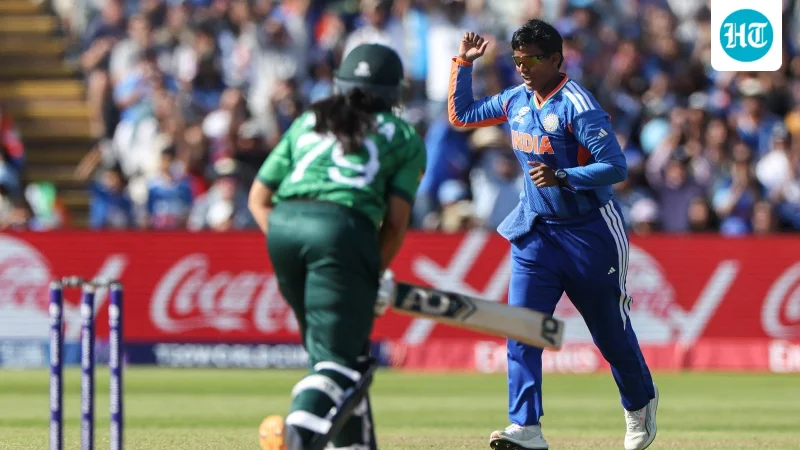
Deepti Sharma has put India’s edge over Pakistan in plain language ahead of Saturday’s Women’s Asia Cup meeting, saying her side are “always one step ahead” even as the rivalry carries obvious tournament weight. India have already sealed a semifinal place with a game to spare, while Pakistan go into their second match needing a result to improve their position.
That is why IndW vs PakW is drawing attention now. India and Pakistan will meet on Saturday in the Women’s Asia Cup, and the match arrives with India unbeaten and Pakistan sitting second in the points table after winning their opening game. For India, the final league match is about keeping that run intact. For Pakistan, a win would do more than add points; it would strengthen semifinal hopes and keep the pressure on the teams around them.

Sharma, who has taken six wickets from India’s two matches so far, said there was “no advantage as such” in the fixture, even though India lead the T20I rivalry 14-3. Her point was not that the gap does not exist, but that India have earned the position through repeated wins, in the Asia Cup and elsewhere, and now carry that confidence into another meeting with Pakistan. In a rivalry that has long tilted one way, the numbers are the loudest argument in the room.
She also described India as balanced across batting and bowling, saying the whole side is performing well and that the team wants to play a good brand of cricket. That balance matters because it is what has separated India from Pakistan in this format: a batting group that can keep the innings moving and a bowling unit that has been compact enough to hold opponents down across two games. Pakistan, by contrast, arrive with the tougher task of matching India across both disciplines, not just one.
The friction is that Sharma’s confidence sits beside a warning wrapped inside her own words. India may be ahead in the rivalry and already through to the semifinals, but Pakistan have the cleaner immediate need, and that can make a league match sharper than the table suggests. If India stay compact again, they protect an unbeaten run and the sense of control they have carried through the tournament. If Pakistan can force that balance to wobble, they do more than beat a rival — they change the shape of their own campaign.