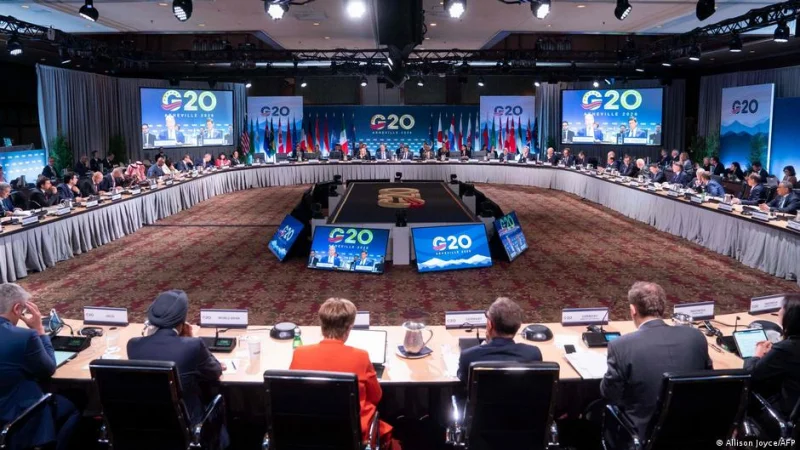
Russian Finance Minister Anton Siluanov made an unexpected appearance as G20 talks opened late Monday in Asheville, North Carolina, putting Russia back into the room at a meeting of finance ministers and central bank heads. He also held a bilateral meeting with US Treasury Secretary Scott Bessent.
The return landed with immediate political friction. Donald Trump, when asked about the first in-person Russian invite since the 2022 full-scale invasion of Ukraine, said, "We like getting along with everybody," even as European officials signaled they wanted no part of the gesture. Lars Klingbeil said, "Receiving the Russian finance minsiter here sends a troubling signal," and said he and his European colleagues would not appear in the traditional family photo alongside the Russian media. The photo was later taken without Siluanov and away from the media.
That split mattered because the US currently holds the rotating G20 presidency and is hosting the session. It also came as the meeting was already being pulled in several directions by the war in Iran, its economic fallout and Trump's trade dispute with Canada, leaving little doubt that the diplomacy in Asheville was never going to be calm.

Bessent's meeting with Siluanov carried a harder message behind the scenes. A US government official told several news agencies, on condition of anonymity, that Bessent told the Russian minister the US would not give Russia economic relief until it brings its four-and-a-half-year invasion to a close. In plain terms, that means the G20 invite was not a reopening of business as usual; it was a test of whether Moscow could be brought back into a forum that still withholds relief tied to the war in Ukraine.
The discomfort was not limited to the officials in the room. Andrzej Domanski said he recognized the right of the G20 hosts to invite guests, but that he was unhappy to see Moscow represented. He said, "We do not trust Russia. They lie constantly and you need to be really, really cautious while discussing with them," and added, "So for me it would be very difficult to have any kind of conversation with Russia."
There was also a dispute over who got to watch the gathering. News said its team was not allowed access to the meeting, while the and complained that journalists who would typically cover such events were refused credentials. Klingbeil said, "I believe the press has a completely legitimate interest in reporting openly and freely on this G20 summit," and added, "I consider it unacceptable for journalists or entire editorial teams to be excluded."
Last week, Klingbeil had already said in a German political podcast that he would bring a simple message to the US about Donald Trump's war in Iran: that it needed to end. Now the message from Asheville is sharper. Russia was welcomed into the G20 room again, but not back to normal standing, and the next step depends on whether the talks produce anything beyond a photograph that half the participants wanted to avoid.