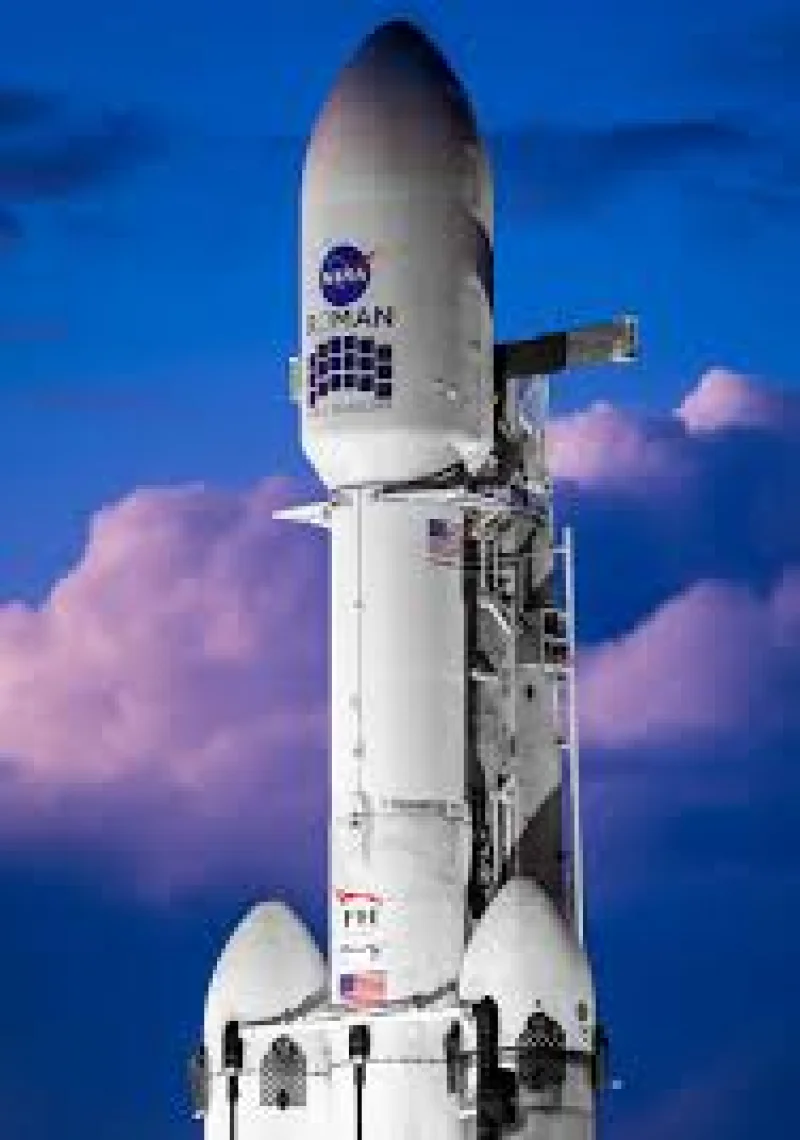
NASA and SpaceX are targeting the Nancy Grace Roman Space Telescope for launch no earlier than 7:26 a.m. EDT on Sunday, Aug. 30, from Launch Complex 39A at Kennedy Space Center in Florida. The liftoff window gives the mission a fixed start point, and the day is already packed with launch coverage, briefings and a flyby from NASA Administrator Jared Isaacman.
Coverage begins at 6:20 a.m., before the rocket even leaves the pad. That timing matters because Roman is not a routine payload. The observatory is built to study dark energy and other deep questions about the universe, and NASA says it will do so with sharp infrared vision and a field of view at least 100 times larger than Hubble Space Telescope’s.
That wider view is what makes Roman useful from the first day it starts working. Its surveys are intended to help scientists investigate dark energy and dark matter, discover and characterize exoplanets, map billions of galaxies, study black holes, and explore objects from our own solar system to the edge of the observable universe. After launch and separation from the SpaceX Falcon Heavy rocket, the spacecraft is set to head to the second Sun-Earth Lagrange point, known as L2, about one million miles from Earth.

The mission’s schedule also shows why the launch target is only the beginning. Roman has a five-year primary lifetime, with a goal of operating for 10 years, and its science data will be publicly available only after processing. In other words, the public gets the results later, after the observatory has done its work and the data have been cleaned and checked.
The day’s schedule keeps pushing that point home. NASA’s Roman Space Telescope Mission Science Briefing is set for 9 a.m. in the NASA Kennedy Press Site auditorium, followed by the prelaunch news conference at 10:30 a.m. In-person interviews are scheduled for 12 p.m. in the NASA Kennedy Press News Center, and the flyby by Isaacman is expected at 11:45 a.m., shown live on the same stream as the news conference.
For now, the story is simple: Roman has a launch time, a launch site and a mission path. If the countdown holds, the telescope will leave Launch Complex 39A on Sunday morning and begin the long trip toward L2, where the real work starts.