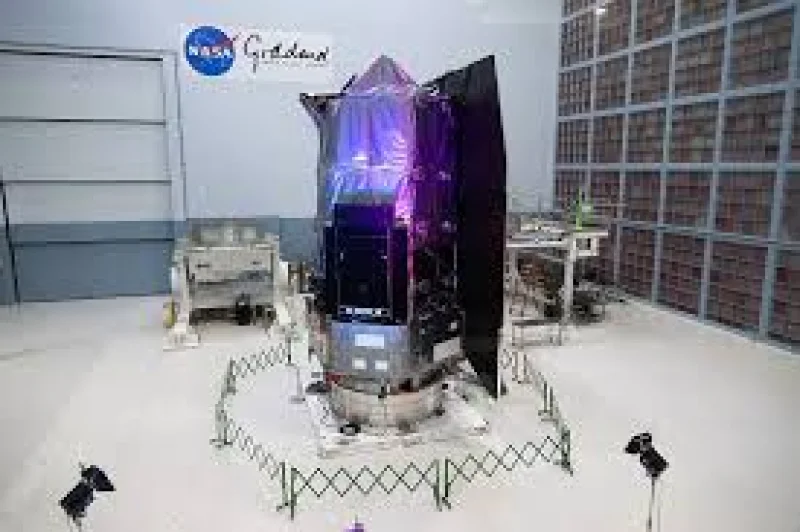
NASA and SpaceX are targeting the launch of the Nancy Grace Roman Space Telescope for no earlier than 7:26 a.m. EDT Sunday, Aug. 30, from Launch Complex 39A at Kennedy Space Center in Florida. Coverage begins at 6:20 a.m., setting up a Sunday morning launch window that puts the observatory’s first trip toward orbit on the day’s early schedule.
The mission matters because Roman is built to do a very broad kind of astronomy in one sweep. Its sharp infrared vision and field of view, which is at least 100 times larger than Hubble’s, are meant to let scientists search for dark energy and dark matter while also finding and characterizing exoplanets, mapping billions of galaxies, studying black holes, and examining objects from the solar system to the edge of the observable universe. Named for NASA’s first chief astronomer, the telescope is expected to become a major survey instrument if the launch proceeds on time.

That scope is also why the next steps are already on the calendar. NASA’s Roman Space Telescope Mission Science Briefing is scheduled for 9 a.m., followed by a prelaunch news conference at 10:30 a.m., with in-person interviews at 12 p.m. and a postlaunch news conference at 9:30 a.m. Live coverage will also include audio on NASA “V” circuits. The telescope will lift aboard a SpaceX Falcon Heavy rocket and, after separation, head for the second Sun-Earth Lagrange point, or L2, about one million miles from Earth.
The schedule still has a wrinkle. NASA Administrator Jared Isaacman is expected to fly past the Nancy Grace Roman Space Telescope and Falcon Heavy rocket on the launchpad in his jet at 11:45 a.m., but that flyby is subject to weather and operational considerations. If the launch stays on target, Roman will begin a mission with a five-year primary lifetime and a goal of operating for 10 years, with its science data to be made publicly available after processing.
For now, the key question is not what Roman can do. It is whether NASA and SpaceX can keep the telescope on the narrow Sunday morning window they have set, and turn a long-planned observatory into a live launch-day reality.